
Why a Wrought Iron Fence Holds Up High-Desert Wind and Freeze-Thaw in Sparks
If you are weighing a wrought iron fence high enough to contain a jumping dog or secure a pool in Sparks or Reno, the climate here should shape your decision as much as the look. High-desert wind, freeze-thaw swings through Washoe County winters, and alkaline soil all treat fence materials differently. Iron handles most of it well, but only when the fence is built for these conditions from the start. Understanding iron fence wind resistance in this environment is essential before you commit to a design.
This article walks through seven things to evaluate before you commit. It is written for two readers in particular: the parent or pet owner who needs a fence that actually keeps a dog in or a toddler out of the pool area, and the small landlord who needs a durable fence across a few rental units without repeat repair calls. Each item is self-contained, so skim the headings and slow down where it matters to you.
1. How Wind Moves Through Open Pickets and Affects Iron Fence Wind Resistance
Wind is the first reason iron makes sense here. A solid privacy fence catches wind like a sail, and a panel that blocks wind almost completely is more prone to blowing over than an open design that lets air move through. A wrought iron fence is mostly open space between pickets, so gusts coming off the valley floor push against steel bars, not a flat wall. This open-picket design provides natural iron fence wind resistance compared to solid panels.
For a pet owner, that openness is a trade-off worth naming. Your dog can see through the fence, which stops some dogs from pacing and digging but winds up other dogs that react to passing traffic. For a landlord, the wind resistance is the bigger win; fewer blown-down sections means fewer emergency fence repair calls between tenants.
2. Freeze-Thaw Cycles Punish Posts, So Footing Depth Matters More Than Panel Brand
Washoe County winters swing above and below freezing repeatedly, and that cycle moves soil. Shallow post footings heave, and a heaved post turns a straight fence line into a leaning one within a few seasons. Iron panels themselves shrug off cold; the failure point is almost always the post and the concrete around it.
Ask any installer how deep they set posts and how they handle footings for frost movement. Alkaline soil in parts of Sparks and Reno adds another wrinkle, since it affects post-setting and accelerates problems for buried wood. Steel posts avoid the warping, rotting, and twisting that wood posts develop over time. When properly installed, a fence with adequate wind resistance and deep footings tends to stay plumb longer than a wood fence on the same lot.
3. Pick Fence Height for the Job: Pool Code, Dog Containment, or Perimeter Security
Height is the single biggest decision for safety buyers. A wrought iron fence 4ft high works for many front yards and decorative borders, but a determined dog or a pool enclosure usually calls for more. Pool barriers come with specific height, picket-spacing, and gate requirements, and a 6ft high wrought iron fence with tight picket spacing handles both pool code concerns and most escape-artist dogs.
Here is a quick way to think about common heights:
- 3 feet high: decorative borders and garden edging, not containment
- 4 feet high: standard yard definition, small dogs, low-traffic front yards
- 6 feet high: pool enclosures, medium and large dogs, rental property perimeters
- 8 feet high: security perimeters for commercial or multi-unit properties
Confirm the exact pool barrier requirements with Washoe County or your local building department before you order panels, since codes govern picket spacing and gate hardware, not just height. An installer familiar with local inspections should walk you through this rather than quote a generic fence.
4. Gates Fail Before Panels Do, So Specify Self-Closing and Self-Latching Hardware Up Front
Most containment failures happen at the gate, not the fence line. A gate left ajar defeats a perfect fence, which is why pool codes require self-closing hinges and a self-latching mechanism mounted out of a child's reach. If your installer does not bring up gate hardware before you do, that is a signal they have not built many pool fences.
Suppose a family in a Sparks subdivision installs a pool and needs the barrier approved before swim season. In that scenario, the inspection hinges on gate swing direction, latch height, and closure speed as much as on fence height. Wrought iron gates 6ft high with spring hinges and a magnetic or gravity latch are a standard answer; the install details determine whether they pass. Landlords face the same issue at turnover, since a new tenant with kids can make pool compliance a move-in condition.
5. Wrought Iron vs Aluminum: Weight, Strength, and Maintenance in a Dry Climate
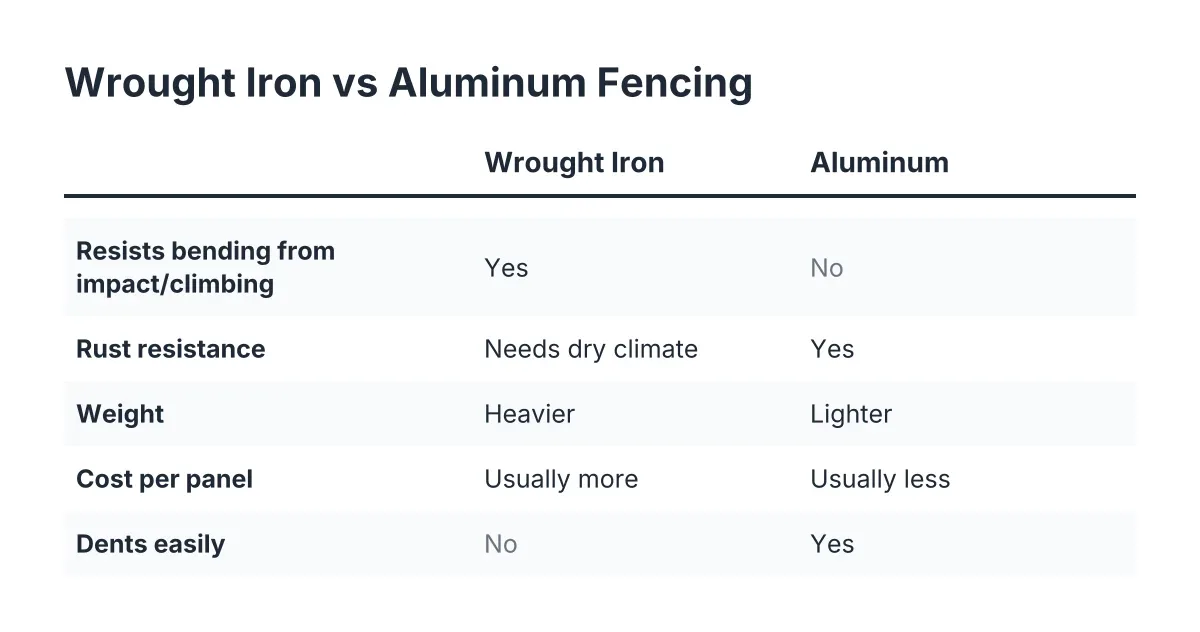
Aluminum is the main alternative, and the comparison is worth making honestly. Iron and steel are heavier and stronger, so they resist bending from an impact, a leaning dog, or a climbing kid better than aluminum of the same profile. Aluminum never rusts, weighs less, and usually costs less per panel, but it dents and bends more easily.
The dry Sparks climate narrows iron's biggest weakness. Rust needs moisture, and the high desert offers less of it than most regions, so a powder-coated or galvanized iron fence here needs less upkeep than the same fence would in a wet climate. Metal fencing overall, including steel, aluminum, and ornamental types, held the largest share of the US fencing market at 56.4% in 2025, according to Grand View Research, so you will find plenty of options in both materials. For a high-traffic rental yard or a dog that throws its weight at the fence, iron's rigidity and inherent wind resistance usually justify the difference.
6. Iron Fence Wind Resistance and Height for Rental Property Durability
For most rental properties in Sparks and Reno, a wrought iron fence between 4 and 6 feet high covers the common needs: a 4-foot fence defines the yard and contains small pets, while a 6-foot fence handles larger dogs, pool areas, and security concerns. Landlords with multiple units usually standardize on one height to simplify repairs and keep spare panels interchangeable.
Standardizing pays off over time. Say a landlord owns three rentals across Sparks and Sun Valley and fences all of them with matching 6ft high wrought iron fence panels. When a car backs into a corner section at one property, the replacement panel matches, the repair is one visit, and the same local fence company that did the installs handles it. Compare that to three properties with three different fence materials, each aging on its own schedule. Wood fences last about 15 years on average according to Angi, and they need staining along the way; iron on steel posts is the lower-maintenance path for a hands-off owner.
7. Panels and Posts Are Buyable, but Installation Is Where DIY Projects Go Wrong
Prefabricated wrought iron fence panels are widely available, and bolting a panel to a set post is within reach for a handy homeowner. The hard parts are everything around that step: digging consistent post holes in rocky or alkaline soil, setting posts plumb and in line across a sloped lot, racking or stepping panels to follow grade, and getting footings deep enough to ride out freeze-thaw movement.
There are also situations that call for reinforcement beyond a standard install. A fence line in an exposed, wind-prone corridor may warrant heavier posts or closer post spacing to enhance iron fence wind resistance; a tall fence can be made stronger against wind by pairing heavier existing steel posts with new ones between them rather than starting from scratch. Those are judgment calls an experienced crew makes on site. If your project involves a pool barrier, an inspection, or a property line question, bring in a professional rather than guessing; a failed inspection or a neighbor dispute costs more than the labor you saved.
What a Full Wrought Iron Fence Installation Should Include
Before you compare quotes, know what the scope of work should cover. A complete fence installation quote for iron typically includes:
- Site layout and marking the fence line, with utility locates before digging
- Post holes, posts, and concrete footings sized for wind and frost conditions
- Panels racked or stepped to follow your lot's grade
- Gates with hinges and latches specified for the use, including self-closing and self-latching hardware for pool barriers
- Haul-away of the old fence, which some quotes treat as an extra, so ask
Timeline depends on fence length, slope, soil, and whether concrete needs cure time before panels hang, so get a project-specific schedule rather than assuming a universal number. On cost, there is no honest flat answer. Pricing reflects height, linear footage, gate count, decorative detail, slope, soil conditions, and access, not just material. A taller fence with more gates and custom picket spacing costs more because it uses more steel and more labor, and quotes that skip those details tend to grow later.
Questions to Ask Before You Hire a Fence Installer in Washoe County
Three questions separate a crew that knows this area from one reading a generic spec sheet. First, how deep do you set posts, and how do you account for freeze-thaw and our soil? Second, if this is a pool barrier, which code requirements apply to height, picket spacing, and gate hardware, and will it pass inspection? Third, what exactly does the quote include, from old fence removal to gate hardware to haul-away?
A fair quote itemizes the scope in writing, explains the cost drivers rather than hiding them, and addresses your specific need, whether that is a dog that finds every gap or a pool that cannot open until the barrier passes. As of 2026, demand for fencing remains steady, so good crews book up; getting specific answers early keeps your project from stalling.
If you are planning an iron fence in Sparks or Reno, whether it is a pool barrier, a dog-proof yard, or matching perimeters across a few rental units, Reno Sparks Fence Pros can walk your property, talk through heights and gate hardware, and put together an estimate built for how this area actually treats a fence. Reach out when you are ready to compare real numbers for your lot.
If you need wrought iron fence installation, Reno Sparks Fence Pros can help.
Prefer to talk it through? Call (775) 369-4729 — a quick call is usually the fastest way to get a straight answer for your situation.