
Chain Link Fence vs. Vinyl: A Step-by-Step Guide to Choosing for Durability
If your HOA packet lists approved materials and you are stuck between a chain link fence, vinyl fence panels, or a vinyl-coated hybrid of the two, you are not alone. The question of chain link versus vinyl fencing comes up constantly in Sparks and Reno planned communities, especially when the rules mention color, height, and "neighborhood character" without saying what those words mean in practice. Choosing between chain link vinyl HOA fencing, wood, and composite options is a common dilemma for homeowners in restrictive communities. This guide walks you through the comparison step by step, so you can pick a fence that survives Washoe County weather, passes your architectural review on the first submission, and does not land you a violation notice two years from now.
One note before we start. "Vinyl" shows up in two different ways in fencing. There are solid vinyl fence panels, the white or tan privacy fences you see lining newer subdivisions. And there is vinyl-coated chain link, which is standard chain link fabric wrapped in a colored PVC coating, usually black, brown, or green. Both matter here, and your HOA may treat them differently. We will cover both.
Step 1: Pull Your HOA's Fence Rules Before You Compare Anything
Start with the governing documents, not the materials aisle. Read the CC&Rs and the architectural guidelines, and look for four things: approved materials, maximum height, approved colors, and whether street-facing fences have different rules than backyard fences.
Many Sparks and Spanish Springs communities allow vinyl fence installation along rear property lines but restrict bare galvanized chain link anywhere visible from the street. However, some of those same HOAs accept chain link with black vinyl coating because it reads as understated and disappears visually against landscaping. You will not know until you read the documents or ask the board in writing.
Therefore, do this first. The single most common cause of a rejected submission is picking the material before reading the rules. If a neighbor has a fence that seems to break the guidelines, do not use it as precedent; it may be grandfathered, or it may be the next violation notice the board sends.
Step 2: Chain Link and Vinyl Durability for HOA Fencing
Durability is not abstract here. Sparks and Reno fences face high-desert wind, hard UV exposure, and freeze-thaw cycles that stress posts and footings every winter. Judge both materials against those specific conditions.
Chain link, especially vinyl-coated chain link, handles wind well because the open mesh lets gusts pass through instead of pushing against a solid surface. The galvanized steel core resists rust, and the PVC coating adds a second layer of protection plus color. Metal fencing as a category, including chain link and wrought iron fence styles, held the largest share of the US fencing market at 56.4% in 2025, according to Grand View Research. There is a reason it dominates: steel takes abuse.
Solid vinyl fence panels resist rot, insects, and fading far better than a wood fence, which Angi reports lasts about 15 years on average depending on wood type, climate, and pest exposure. Vinyl does not need staining or sealing. However, solid panels catch wind like a sail. In exposed Sparks lots, that wind load transfers to the posts, so post depth, footing quality, and post spacing decide whether the fence stands straight in five years. Vinyl is also still PVC; in extreme heat or a wildfire scenario, it can melt or burn where steel would survive.
Step 3: Weigh the Maintenance Each Fence Will Actually Demand
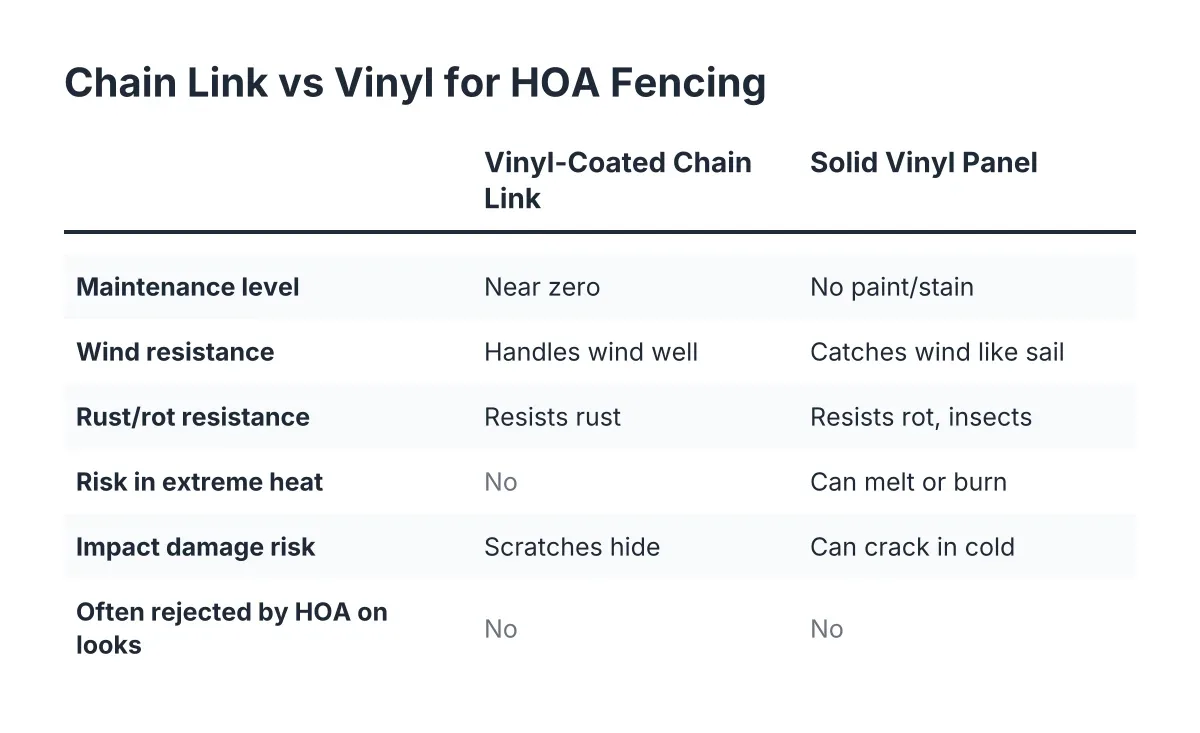
Here is the honest comparison, condensed:
- Vinyl-coated chain link: Near zero maintenance. Occasional rinse, check tension bands and ties every few years, done. The coating hides scratches and resists UV chalking.
- Bare galvanized chain link: Low maintenance, but it stays industrial-looking and will dull over time. Many HOAs reject it on appearance alone.
- Solid vinyl fence: No painting or staining, but panels can crack from impact in cold weather, and a cracked picket usually means replacing the whole panel section. Posts are the foundation of the system; if a post heaves or leans, the panels it carries go with it.
- Chain link with vinyl privacy slats: The slats add screening to an existing chain link fence, but they also add wind load and can fade or loosen over time. Some HOAs count slatted chain link as a privacy fence and regulate it like one.
As a result, the maintenance winner depends on what fails first in your conditions. In windy corridors, vinyl-coated chain link fencing on a steel frame tends to outlast solid panels because there is less surface for gusts to grab. On calm interior lots, solid vinyl runs for decades with little attention.
Step 4: Match the Material to What Your HOA Will Approve First Try
Translate the durability facts into an approval strategy. If your guidelines say "no chain link," ask specifically whether black vinyl-coated chain link is included in that ban; some boards wrote the rule picturing bare galvanized fabric and will consider coated versions, especially for side yards or lots backing open space. Get any interpretation in writing before you submit.
Suppose a homeowner in a Spanish Springs community gets a violation notice for a sagging galvanized fence along a greenbelt. In that scenario, submitting a black vinyl-coated chain link replacement at the same height, with a chain link fence installation diagram showing post spacing and footing depth, gives the board something concrete to approve. Boards reject vague submissions; they approve specific ones. A simple chain link fence detail drawing showing terminal posts, line posts, top rail, and tension wire answers most of the questions a review committee would otherwise bounce back to you.
If the guidelines require a solid privacy fence in white or tan, vinyl panels are likely your path, and the comparison shifts to getting the installation right rather than the material debate.
Step 5: Understand What a Proper Installation Includes for Each Material
Know what you are approving a contractor to do, because installation quality decides durability more than the material does. For chain link fence installation, a complete scope covers layout, post holes set below frost depth, concrete footings, terminal and line posts, top rail, tension bars and bands, fabric stretched to proper tension, and ties sized to the pipe diameter. Gates, privacy slats, and removal of an old fence are usually priced as extras.
For vinyl, the posts carry everything. Heavy-duty end and corner posts are built thicker than line posts for a reason; corners take the most stress. In tricky spots, like butting against an existing fence or working around a tree, a good installer reinforces the vinyl post with a steel pipe inside it. On sloped Reno lots, experienced crews adjust how panels are built so pickets do not slide downhill during assembly. These details never show up in a low bid, and they are exactly what separates a fence that lasts from one that leans by year three.
Our alkaline soil adds one more wrinkle. It affects concrete footings and accelerates rot on wood fence posts, which is part of why steel and vinyl are the two materials this comparison comes down to in the first place.
Step 6: Decide Where DIY Ends and a Pro Begins
A handy homeowner can repair a bent chain link tie, re-tension a loose section, or replace vinyl slats in existing mesh. Stretching chain link fabric correctly, setting posts plumb in rocky ground, and getting footings below frost line are harder than online diagrams suggest, and a poorly stretched fence sags fast.
Call a local fence company rather than DIY when any of these apply:
- The fence sits on a property line or shared HOA boundary.
- Posts are heaving, leaning, or cracked at the footing.
- Your HOA requires a drawing or spec sheet with the submission.
- The run is long, sloped, or exposed to sustained wind.
- You need the work invoiced to an association or coordinated across phases.
Property managers handling common-area perimeter or pool fencing fall squarely in that last category. Shared fencing carries code and liability questions a weekend project should not touch, and chain link fencing accounts for nearly 34% of total US fencing demand, according to Global Growth Insights, largely because commercial and shared-property work leans on it.
Step 7: Get Quotes That Compare the Same Fence, Not Just the Same Price
Cost factors for both materials include linear footage, height, gates, slope, soil conditions, old fence removal, and coating or color choices. A vinyl-coated chain link fence costs more than bare galvanized; solid vinyl panels sit in a different bracket again. Beware comparing a bargain bid against a detailed one. The cheapest fence often costs more over time because it gets rebuilt sooner; pricing reflects construction practices, materials, and expected lifespan, not just steel and labor.
Ask every bidder three questions: How deep do you set posts for this soil and wind exposure? What exactly is included, and what is extra? Can you provide a detail drawing my HOA can approve? A fair quote answers all three in writing.
If you are weighing a chain link fence, vinyl panels, or a coated hybrid for a Sparks or Reno property, Reno Sparks Fence Pros can walk the line with you, talk through what your HOA is likely to accept, and put together an estimate built for Washoe County conditions. Reach out when you are ready to compare real numbers for your lot.
If you need chain link fence installation, Reno Sparks Fence Pros can help.
Prefer to talk it through? Call (775) 369-4729 — a quick call is usually the fastest way to get a straight answer for your situation.