
HOA-Compliant Chain Link Fence in Sparks and Reno: Rules and Approval Steps
Getting an HOA compliant chain link fence approved in Sparks or Reno comes down to knowing what your association regulates before you order a single post. Most HOA pushback is not about chain link itself. It is about height, visibility, color, and where the fence sits on the lot. This FAQ walks through the questions homeowners and property managers ask most, so you can read your CC&Rs, submit a clean application, and spec a fence that passes review the first time. Understanding HOA fence approval requirements is essential before moving forward with any installation.
Do HOAs in Sparks and Reno allow chain link fences at all?
Many HOAs in Sparks and Reno allow chain link fencing, but usually with conditions on where it can go and how it must look. Newer subdivisions often restrict chain link to backyards, side yards, or areas not visible from the street. Older neighborhoods and ranch-style lots across Washoe County frequently have no restriction at all.
The answer lives in your CC&Rs, the covenants, conditions, and restrictions recorded for your community. Look for the section on fences, walls, or exterior improvements. If the document is silent on chain link, that does not mean automatic approval; most associations still require an architectural review before any fence installation.
What steps ensure your chain link fence gets HOA approval?
An HOA compliant chain link fence matches the association's written standards on height, color, placement, and finish. The most common requirements are a height limit, a color-coated finish such as black or green vinyl-coated mesh, and placement behind the front plane of the house. Some associations also require top rails and matching gate hardware.
Here is what review boards in this area typically check:
- Height: Backyard fences usually face one limit, front and corner lots another. City setback rules in Sparks and Reno apply on top of HOA limits.
- Finish: Vinyl-coated black chain link reads as more finished than bare galvanized mesh. Many boards approve coated fabric and reject galvanized on sight lines visible from the street.
- Placement: Fences along common areas, trails, or drainage easements often need extra sign-off.
- Framework: Matching coated posts, rails, and fittings, not mixed bare and coated parts.
- Gates: Same height and finish as the fence, with hardware the board has approved before.
Coated chain link costs more than bare galvanized, so weigh that against the approval odds before you submit.
How do I get HOA fence approval for a chain link fence?
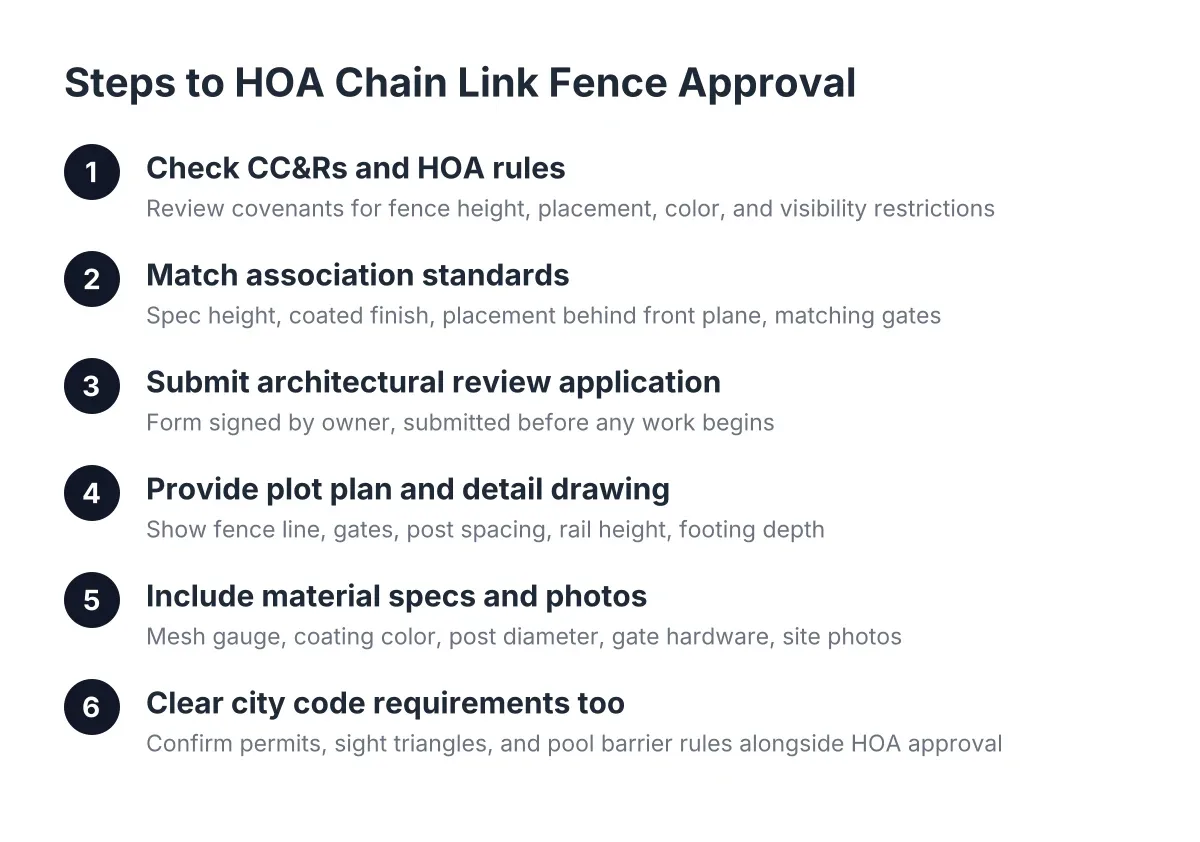
Approval for a chain link fence in a Sparks or Reno HOA starts with an architectural review application, usually a form plus a site plan and material specs. Submit before any work begins. Boards typically meet monthly, so build review time into your schedule, especially if you want the fence in before winter freeze-thaw season.
A typical application packet includes:
- The association's architectural request form, signed by the owner.
- A plot plan or survey showing the fence line, gates, and distances to property lines.
- A chain link fence installation diagram or detail drawing showing height, post spacing, rail placement, and footing depth.
- Material specs: mesh gauge, coating color, post diameter, and gate hardware.
- Photos of the fence location and, if required, written sign-off from adjoining neighbors.
A detail drawing does real work here. Boards reject vague applications more often than they reject chain link. When a reviewer can see post spacing, top rail height, and the coated finish on paper, you have answered their objections before they raise them.
What do city codes in Sparks and Reno add on top of HOA rules?
City codes in Sparks and Reno set the legal ceiling that no HOA approval can override, covering fence height, corner-lot sight triangles, and pool barriers. HOA approval does not replace a permit where one is required, and a permit does not replace HOA approval. You need to clear both.
Pool fencing is the strictest category. Pool barrier codes set minimum heights, maximum mesh openings, and self-closing gate requirements. The safety case is strong: a four-sided isolation pool fence separating the pool from the house and yard reduces a child's drowning risk by 83 percent compared to three-sided property-line fencing, according to the Centers for Disease Control and Prevention. For HOA boards managing community pools in 2026, a compliance audit of gate closers and mesh openings is worth putting on the annual reserve calendar.
Codes and CC&Rs both change, so verify current requirements with the city and your association before finalizing a design. A local fence company that works in Washoe County regularly can flag conflicts between the two before they cost you a resubmittal.
Is chain link a reasonable choice compared to wood or vinyl for HOA lots?
Chain link holds up well on Sparks and Reno lots because open mesh lets high-desert wind pass through instead of pushing against solid panels. Chain link fencing accounts for nearly 34 percent of total fencing demand in the United States, according to Global Growth Insights, so it is a mainstream choice, not a fallback. The trade-off is privacy; chain link gives you none without slats.
Compare the three on what matters here:
- Chain link: Lowest wind load, no rot, no paint. Galvanized or coated steel shrugs off freeze-thaw swings. Weakest on privacy and curb appeal, which is where HOA friction starts.
- Wood fence: Full privacy and a traditional look, but solid panels catch wind, and alkaline soil conditions in this area work against buried wood over time.
- Vinyl fence: Low upkeep and a clean look that boards approve easily, at a higher upfront cost than chain link.
For a shared perimeter along open space or a drainage channel, coated chain link is often the practical pick. For a street-facing run in a newer subdivision, the CC&Rs may steer you to wood or vinyl regardless of preference.
Can I install an HOA compliant chain link fence myself?
You can install chain link yourself if your HOA approves the application, but the approval conditions are where DIY jobs stumble. Boards approve a specific height, finish, and line. A post set an inch too high, fabric that sags between posts, or a gate that does not match the drawing can trigger a violation notice after the work is done.
Professional chain link fence installation matters most at the details: post footings deep enough for Washoe County frost movement, fabric stretched to tension so it does not ripple in wind, and tie wires sized to the pipe diameter. Crews also plan the layout so any cut or shortened sections land in the least visible stretch of the yard, which keeps the street-facing run clean for the board's final look.
Suppose a homeowner in a Sparks subdivision gets approval for a black vinyl-coated backyard fence at the board's height limit. In that scenario, the riskiest DIY steps are footing depth and fabric tension; everything else is patience. If either of those feels uncertain, a professional install costs less than redoing a fence the HOA has flagged.
What if my existing chain link fence gets a violation notice?
A violation notice on an existing chain link fence usually targets condition, not the material: rusted fabric, leaning posts, missing top rails, or a sagging gate. Most notices give a cure period. Fence repair, such as replacing stretched fabric, resetting a heaved post, or rehanging a gate, often resolves the notice without full replacement.
However, if the framework is rusted through or the fence predates current CC&Rs, the board may require replacement to current standards, meaning coated mesh and compliant height. Grandfathered fences typically lose that status once you replace more than a set portion of the fence, so check your association's threshold before deciding between chain link fence repair and a new run.
The short version
Chain link can absolutely pass HOA review in Sparks and Reno if you match the association's finish and height rules and submit a complete packet with a detail drawing. Read the CC&Rs first, check city code second, and spec coated materials where the fence faces the street. Approval problems come from thin applications far more often than from the material itself.
If you need chain link fence installation, Reno Sparks Fence Pros can help.
Prefer to talk it through? Call (775) 369-4729 — a quick call is usually the fastest way to get a straight answer for your situation.