
Vinyl Fence Lifespan: What Affects Durability in High-Desert Wind Zones
You already picked vinyl. Now the question is how long it will hold up in Sparks or Reno, and what you can do during installation to get the most years out of it. The short answer: vinyl fence lifespan affects far more than resale value, and vinyl fence wind durability decides whether you file HOA paperwork once, or twice when a leaning section draws a violation notice five years in. This guide walks through what shortens vinyl fence life in Washoe County's high-desert conditions, and the installation choices that protect it.
Most of what shortens a vinyl fence's life here is not the vinyl itself. It is wind load, post setting, soil, and layout decisions made before the first hole gets dug. Get those right and the material does its job for decades. Get them wrong and you are repairing posts while the panels still look new.
What Vinyl Fence Lifespan Affects for an HOA Homeowner
A vinyl fence's lifespan affects three things an HOA homeowner cares about: approval paperwork, repair bills, and compliance risk. A fence that fails early means a second architectural review submission, a repair or replacement cost you did not plan for, and possible violation letters if a damaged section sits unfixed. Additionally, a fence built for local conditions avoids all three.
Think about how your HOA actually enforces fence standards. Most planned communities in Sparks and Spanish Springs do not just approve a fence once. They cite homeowners when fences lean, crack, fade unevenly, or lose panels in windstorms. A fence that passes review in year one but sags in year six puts you right back in the compliance process, this time with a deadline attached.
Therefore, the smart move during installation is to treat durability as part of compliance. The style and height your HOA approves is step one. Building that approved design to survive high-desert wind and freeze-thaw cycles is step two, and it is the step most homeowners skip.
How High-Desert Wind Shapes Vinyl Fence Durability
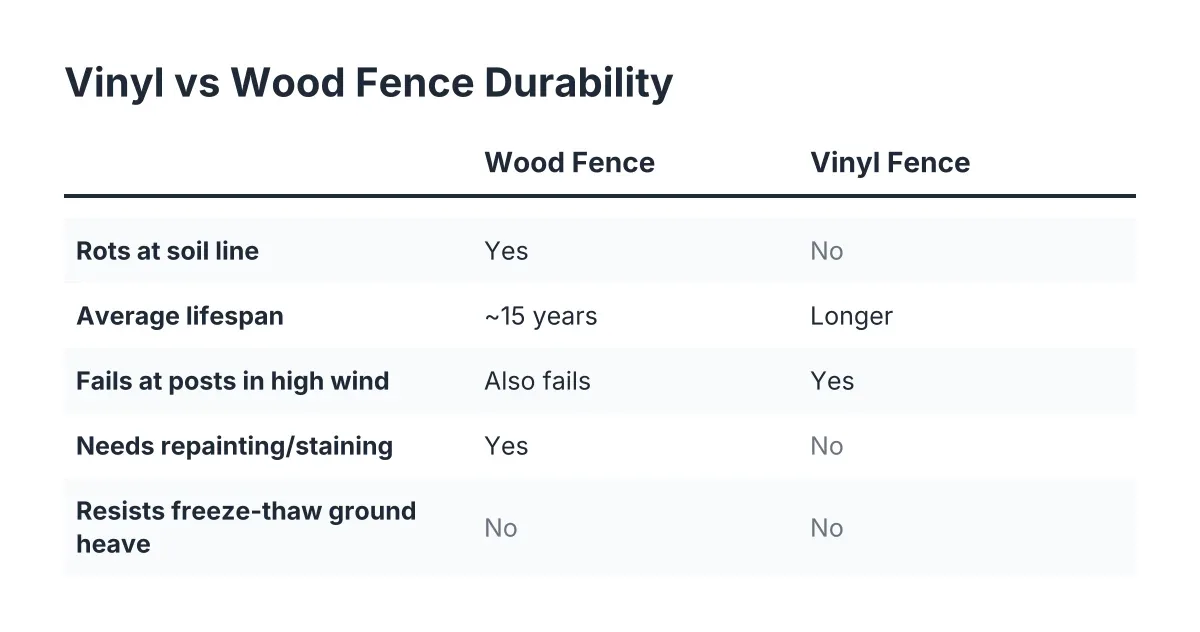
Wind is the single biggest threat to vinyl fence life in the Reno-Sparks area. The Washoe Zephyr and seasonal windstorms put sustained lateral load on fence panels, and a solid privacy fence takes that load like a sail. The fence does not fail at the panel. It fails at the post, where all that force concentrates.
Here is the trade-off most homeowners never hear about. A solid vinyl privacy fence blocks wind almost completely, which sounds like a benefit. However, a fence that blocks all wind also catches all wind. In high-wind corridors, a solid panel run is more likely to blow over than a semi-private or shadow box style that lets air pass through the pickets.
This matters for your HOA submission. If your community allows more than one approved style, and your lot sits exposed on a corner, a ridge, or the windward edge of the subdivision, the style choice is a durability decision, not just a looks decision. Ask your HOA whether a semi-private variant of the approved style is acceptable. Getting that answer before you submit saves you from a rejected plan or, worse, an approved fence that fails.
Post Strength and Vinyl Fence Wind Durability Are Won at the Foundation
Vinyl posts are the foundation of the whole system. Panels, rails, and pickets all hang their structural life on the posts, so a fence in a wind zone lives or dies by how those posts are specified and set. Three choices matter most:
- Heavy-duty end and corner posts. End posts and corner posts are made thicker than standard line posts because they carry more load. In a wind-exposed run, skimping here is where failure starts.
- Reinforced posts at stress points. Where a fence butts against an existing neighbor fence, wraps a tree, or anchors a long exposed run, installers can set a metal pipe in the footing and sleeve the vinyl post over it. The vinyl looks identical from the street; the steel does the structural work.
- Proper footing depth below frost line. Washoe County winters swing through freeze-thaw cycles that heave shallow footings. A post set too shallow loosens a little more each winter until the panel racks and the HOA notices.
In addition, spacing matters. Shorter panel spans put more posts in the ground per hundred feet of fence, which spreads wind load across more footings. On an exposed run, that extra material cost buys years of life.
Soil, Freeze-Thaw, and the Ground Your Fence Stands In
Washoe County soil works against fences in two ways. First, alkaline soil conditions affect how concrete footings cure and how any metal reinforcement holds up over time. Second, freeze-thaw cycles move the ground itself, and a footing that was not set deep enough or drained properly will shift with it.
Vinyl has a built-in advantage here. Unlike a wood fence, vinyl does not rot at the soil line, and rot is the most common way wood posts fail even when the panels above have been repainted and maintained for years. According to Angi, wood fences last about 15 years on average, up to 20 depending on wood type, climate, and pest exposure. Vinyl skips the rot problem entirely, which is a large part of why its service life runs longer.
However, vinyl does not skip the ground-movement problem. A vinyl post set in a shallow or poorly drained footing heaves and leans just like a wood post would. The material resists decay; it does not resist physics. This is why post depth and concrete work carry more weight in a vinyl fence installation than almost any other step. If your installer cannot explain their footing depth and drainage approach for freeze-thaw ground, keep asking questions.
What Vinyl Handles Well, and What It Does Not
Vinyl resists the failure modes that kill wood fences in this climate. It does not rot, does not feed termites, and holds its color far better than paint or stain on wood. For an HOA homeowner, that color stability matters: a fence that fades unevenly or peels is a common source of appearance citations, and vinyl largely removes that risk.
That said, vinyl is still PVC, and it has limits worth knowing before you build:
- Fire. PVC burns in extreme conditions such as a wildfire. In wildland-interface lots on the edges of Reno and Sparks, that is worth weighing against other materials for the exposed side of a property.
- Impact. Cold vinyl is more brittle than warm vinyl. A snowblower strike, a vehicle bump, or a falling branch in January can crack a panel that would flex in July.
- Wind, as covered above. The material survives; the structure fails if posts and style are wrong for the exposure.
For example, say a homeowner in a Spanish Springs subdivision loses two panels in a winter windstorm. In that hypothetical, the panels themselves are usually fine or cheaply replaced; the real repair is the leaning post, and the cost depends on whether the footing failed or just the post sleeve. That is the repair call a durable initial installation is designed to prevent.
Installation Choices That Extend Vinyl Fence Life
Lifespan gets decided during installation week, not during the years after. The crew's decisions on layout, assembly, and hardware either bank durability or borrow against it. Here is what a careful build looks like in practice.
First, layout and slope handling. Sparks and Reno lots mix flat newer subdivisions with older ranch-style parcels on grades. On a sloped run, pickets do not have to be installed in the same direction across the whole fence; installers can reverse their building direction on downhill sections so pickets do not slide as they are inserted. That detail sounds small, but sloppy slope work is how gaps open at the bottom rail, and bottom gaps are a pet-containment problem and a frequent HOA complaint.
Next, rail fitting. Vinyl rails should be cut to length so they sit snugly between posts before being secured with the specialized screws made for vinyl systems. Rails that are loose in the post pockets rattle in wind, and rattle becomes wear, and wear becomes a sagging panel. Snug rails also keep panel faces flat and even, which is exactly what an architectural review committee looks at.
Panel assembly order is flexible. Crews can insert pickets first and cap them with the top rail, or build the top rail first and pop pickets in after. Both methods produce a sound panel; the choice is workflow preference. What matters is that every picket seats fully and every rail locks into its post, because a half-seated picket is the first thing a windstorm finds.
Finally, gates. Gates concentrate wear because they move. A gate post needs the same heavy-duty or reinforced treatment as a corner post, and hinge hardware rated for the gate's weight. Most "my vinyl fence is failing" calls in older installations trace back to a gate post that was set like a line post.
Matching HOA Style Rules to Durability Before You Submit
Your HOA packet probably names a height, a color, and sometimes a style term like "craftsman" without defining it. Translate those rules into durability terms before you submit, so your one submission covers both compliance and wind performance. A local fence company that works Sparks and Spanish Springs subdivisions regularly can read a CC&R fence section and tell you which approved option holds up best on your specific lot.
Work through this checklist before you file your architectural review request:
- Confirm the approved styles, not just the approved material. If both full-privacy and semi-private vinyl are allowed, pick based on your lot's wind exposure.
- Confirm height limits per fence location. Front setbacks, side yards, and rear perimeters often carry different height rules. A taller fence catches more wind, so height and exposure interact.
- Ask about color in writing. Tan and gray vinyl options exist alongside white. An approved color documented in your submission protects you from a dispute later.
- Note reinforcement in your plan. Steel-reinforced posts look identical from the street, so they will not trip an appearance rule, but noting them shows the committee a serious plan.
- Submit a simple site sketch. Mark post locations, gate locations, and the property line. Committees approve clear plans faster, and the sketch doubles as your installer's layout reference.
As a result, your single submission answers the committee's questions and locks in a build spec your installer can price accurately. That is how you avoid the two-submission cycle that stalls fence projects for months.
One honest caution: if your existing fence damage is localized, a repair may be the right call instead of a full vinyl replacement, and a replacement decision near a shared property line should involve a conversation with the neighbor and a check of your plat map. When property lines, utility easements, or shared-fence agreements are unclear, bring in a professional before anyone digs.
Maintenance That Protects Lifespan After the Build
Vinyl is low maintenance, not no maintenance. The gap between a fence that looks new at year fifteen and one cited by the HOA at year eight is a short list of habits.
Rinse the fence a few times a year. High-desert dust and sprinkler mineral deposits dull white vinyl, and a hose plus mild soap handles both. Avoid harsh solvents, which can damage the surface finish.
In addition, walk the fence line after major wind events. Check that posts stand plumb, rails sit seated in their pockets, and gate hinges have not loosened. Catching a slightly leaning post early usually means a footing fix on one post. Ignoring it means the lean spreads load to the neighbors on either side, and one repair becomes three.
Keep sprinklers off the fence line where possible. Constant soaking at the footing softens the surrounding soil and speeds up frost heave in winter. Vinyl will not rot from the water, but the ground under it will move.
Finally, trim vegetation back from panels. Shrubs pressed against vinyl trap moisture and grit, scuff the surface in wind, and hide small cracks until they grow. A clear fence line also makes HOA inspections uneventful, which is the goal.
The Bottom Line for Sparks and Reno Homeowners
What a vinyl fence's lifespan affects most directly is how often you deal with your fence at all: the paperwork, the repair calls, and the compliance letters. Vinyl's material advantages over a wood fence are real, especially against rot and fading in this climate. But in a high-desert wind zone, the installation decisions carry more weight than the material's spec sheet.
As of 2026, the pattern in Washoe County holds steady: the vinyl fences that fail early fail at the posts, in the wind, on lots where style and footing choices did not match the exposure. The ones that last were built with heavy-duty corner and end posts, reinforcement where the run demanded it, footings set for freeze-thaw ground, and a style the wind can live with.
Get those decisions right once, document them in a clean HOA submission, and the fence becomes the quietest part of owning your home. That is the whole point.
If you need vinyl fence installation, Reno Sparks Fence Pros can help.
Prefer to talk it through? Call (775) 369-4729 — a quick call is usually the fastest way to get a straight answer for your situation.