
Vinyl Fence vs Wood Fence in Nevada: How to Compare and Decide
Choosing between a vinyl fence and a wood fence looks simple until you factor in Washoe County weather, HOA rules, and what each material costs you over ten or fifteen years. The vinyl vs wood fence decision comes down to three things: durability in high-desert conditions, how much maintenance you will actually do, and total cost over the life of the fence. This guide walks you through the comparison step by step, the same way a local fence company would talk it through with you before any 2026 project.
Work through the steps in order. Each one narrows the choice before you spend money or submit anything to an HOA.
Step 1: Check Your HOA Rules Before You Compare Materials
Start with the paperwork, not the materials. If you live in a planned community in Sparks or Spanish Springs, your HOA likely restricts fence height, color, and sometimes the material itself. Picking the wrong style is the fastest way to get a rejection and lose weeks resubmitting plans.
Pull your CC&Rs and architectural guidelines and look for three things:
- Material language. Some HOAs name vinyl or wood directly. Others use terms like "craftsman style," which usually means visible posts, flat caps, and clean horizontal lines rather than a specific material.
- Height and placement limits. Front-yard fences often have lower height caps than backyard privacy fences.
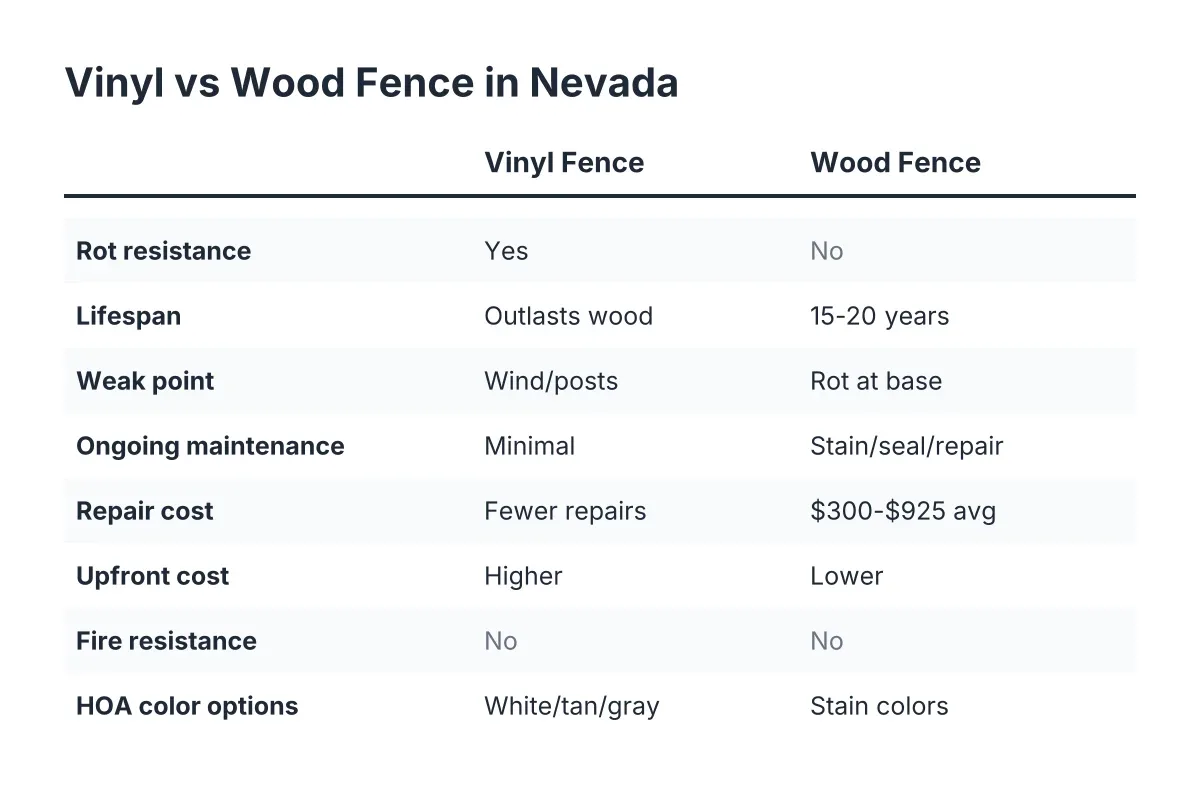
- Color restrictions. Vinyl comes in white, tan, and gray from most manufacturers. If your HOA requires earth tones or stain colors, wood may be the easier approval.
Do not judge what is allowed by looking at your neighbors' fences. Older fences may predate current rules, and a mix of styles on your street tells you nothing about what gets approved today. Submit the exact panel style, height, and color in your application, and get written approval before anyone digs a post hole.
Step 2: Compare Vinyl Fence and Wood Fence Durability in High-Desert Conditions
Vinyl holds up better than wood in Nevada's climate in most ways. It will not rot, and it shrugs off the alkaline soil around Sparks and Reno that speeds up rot at the base of wood posts. Wood fences last about 15 years on average, up to 20 years depending on wood type, climate, and pest exposure, according to Angi. A well-installed vinyl fence typically outlasts that without the same decay problems.
However, each material has a weak point here.
Wind is the big one for vinyl. Sparks sits in a high-wind corridor, and a vinyl privacy fence is a solid sail. The posts are the foundation of the whole system; they carry the panels through every gust. Shallow post holes or skimpy concrete footings are the most common reason vinyl fences lean or fail in Washoe County. Post depth, footing size, and panel style matter more here than they do in calmer climates.
Freeze-thaw cycles work on both. Winter swings through Washoe County heave poorly set posts out of the ground whether they hold vinyl or wood. Proper footing depth below the frost movement zone matters for either material.
Sun and fire. Vinyl resists fading better than unstained wood, but it is still PVC. In an extreme event like a wildfire, it can burn and melt. Wood burns too, so neither material is a fire barrier; it is simply worth knowing vinyl is not fireproof plastic armor.
Step 3: Be Honest About the Maintenance You Will Do
This step decides the choice for a lot of people. Wood looks great the day it goes up, and redwood in particular holds its color well and resists rot naturally. But keeping any wood fence looking that way means re-staining or sealing every few years, replacing warped boards, and checking posts for rot where they meet the soil.
Vinyl asks for almost none of that. Rinse it with a hose when it gets dusty, and check that gates still swing true. There is no staining, no sealing, and no board replacement from rot.
For a small landlord with several rentals across Sparks, Reno, or Sun Valley, this is the real argument for vinyl. Suppose you own three rental houses and the fences are wood. Every turnover inspection becomes a fence inspection too: loose boards, leaning posts, a gate that will not latch. Wood fence repair costs range from $300 to $925 on average, according to Angi, and those repairs repeat over the life of the fence. Vinyl trades a higher upfront price for fewer of those calls between tenants.
Step 4: Weigh Vinyl Fence vs Wood Fence Cost Over the Full Life of the Fence
Is a vinyl fence cheaper than a wood fence? Not upfront. Vinyl materials cost more than standard wood privacy fencing, so the first invoice is higher. Over the full life of the fence, the math shifts, because wood keeps charging you for stain, sealant, board replacement, and eventually a full rebuild while the vinyl fence is still standing.
Rather than fixating on a per-foot number, compare the cost factors that actually move the price in either direction:
- Fence length and gate count. More linear feet and more gates mean more posts, more concrete, and more labor for either material.
- Terrain and slope. Sloped lots common in older Reno neighborhoods need stepped or racked panels, which add labor. On vinyl, a good crew can even reverse the picket-building direction on slopes so pickets do not slide downhill during assembly.
- Soil and access. Rocky ground or tight side-yard access slows digging and raises labor time.
- Style and height. A standard flat privacy panel is the baseline. Board-on-board, shadow box, trim details, or a horizontal fence genuinely take more material and more labor, so they cost more. That holds for custom vinyl profiles too.
- Wood species, if you go wood. Redwood is a premium material with natural rot resistance; budget wood species cost less upfront and fail sooner.
One warning that applies to both materials: the cheapest bid is often the most expensive fence. A contractor who saves money on post depth or concrete in a wind zone like Sparks hands you a fence that needs rebuilding years early. Paying more for proper footings usually costs less in the long run.
Step 5: Decide Between DIY and Hiring a Residential Fence Company
Vinyl fence installation looks DIY-friendly because the panels snap together, and the assembly genuinely is the easy part. Pickets can go in before the top rail, or the rail can go on first with pickets popped in after; both methods work. Rails cut to length fit snugly between posts and secure with specialized screws.
The hard part is everything below grade. Post layout, hole depth, concrete footings sized for wind load, and keeping a long run straight and level are where DIY vinyl fences fail. Tricky spots raise the stakes: butting against an existing fence or working around a tree sometimes calls for a reinforced post, a metal pipe set in concrete with the vinyl post sleeved over it. That is not in the box-store instructions.
A reasonable split looks like this:
- DIY makes sense for a short, flat run on an open lot, with no HOA involved, if you have dug and set posts in concrete before.
- Hire a pro for full perimeters, sloped ground, high-wind exposure, HOA submissions that need exact specs on paper, or any rental property where a failed gate becomes a tenant complaint.
For the HOA planner specifically, a local crew that works in Sparks and Reno subdivisions can give you the panel style, height, and color details your architectural application needs, which cuts the odds of a second submission. For a landlord, one local fence company handling installation and later fence repair across all your units beats juggling a different handyman per property.
Step 6: Match the Material to Your Situation and Commit
Pull the steps together into a decision. As a general guide:
- Choose vinyl if you want low maintenance over 15-plus years, your HOA allows white, tan, or gray, and you can absorb the higher upfront cost. This fits most landlords and most new Sparks subdivisions.
- Choose wood if your HOA requires stained or natural tones, you want a specific look like a horizontal fence or craftsman detailing, or upfront budget is the binding constraint and you accept the maintenance schedule.
Neither answer is wrong. The vinyl vs wood fence trade-off is upfront cost against ongoing cost, and appearance flexibility against low upkeep. If your lot has steep slopes, severe wind exposure, or soil you are unsure about, have a professional look at the site before you commit; post setting in those conditions is where the real judgment calls live, and it is the one part of the fence you cannot see after the job is done.
Prefer to talk it through? Call (775) 369-4729 — a quick call is usually the fastest way to get a straight answer for your situation.