
Horizontal Wood Fence Installation Timeline: How Long It Takes in Sparks, NV
If you just closed on a new-build lot in Sparks, NV with a bare backyard and a dog that bolts, the first question is usually not what the fence looks like. It is how fast you can get it up. Horizontal wood fence installation takes longer than a standard vertical privacy fence, and knowing why helps you plan around pets, kids, and HOA deadlines. This guide walks through the horizontal fence installation timeline step by step, from the first site visit to the day you can finally leave the back door open.
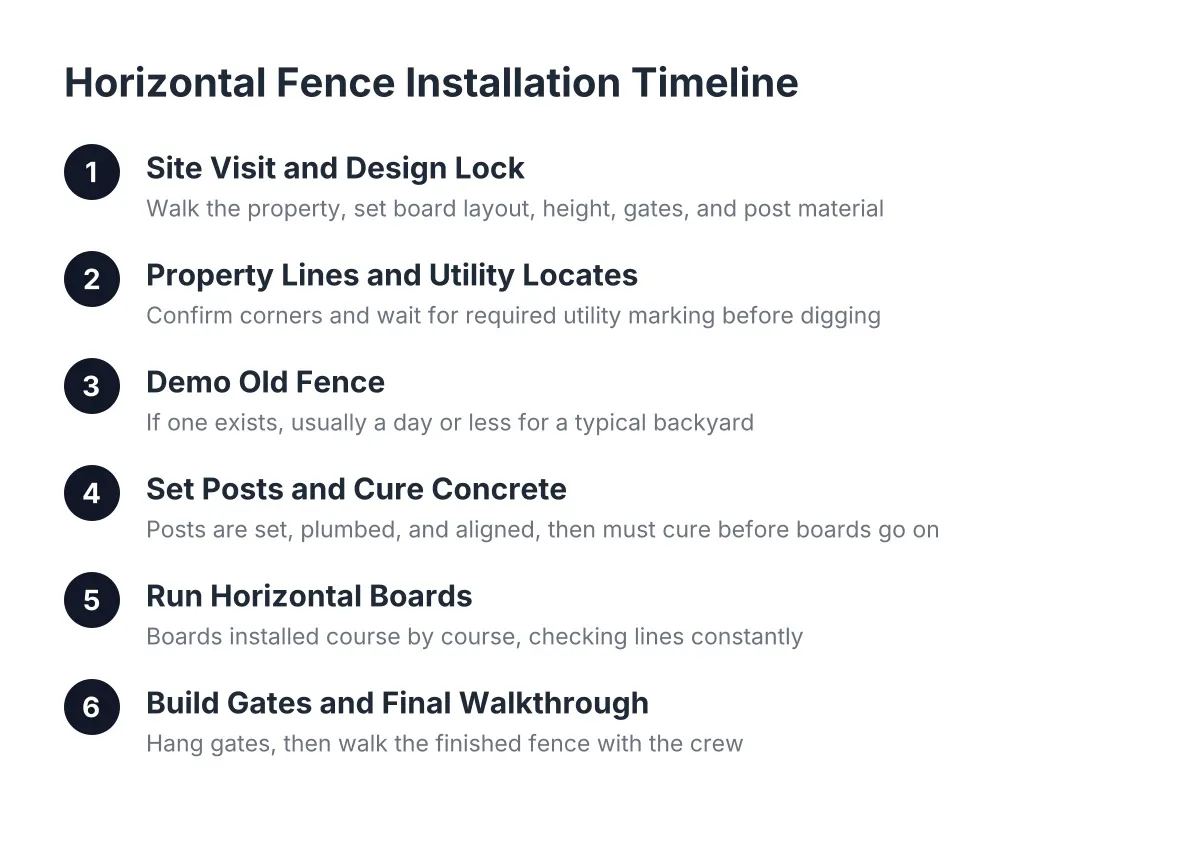
The short version: expect the build itself to run in phases, with a mandatory pause after posts are set. The exact number of days depends on your lot size, soil, weather, and how custom the design gets. Here is how a typical crew moves through it.
Step 1: Schedule the Site Visit and Lock the Design
Start by getting someone on your lot. A phone estimate for a horizontal fence is a guess; a site visit is a plan. In Sparks and Spanish Springs new developments, the installer needs to walk the property lines, check grade changes, and confirm where gates go.
This visit also settles the design decisions that control your timeline:
- Board layout: tight privacy boards or a horizontal wood fence with gaps for airflow and a lighter look
- Fence height, which matters if you are containing a jumper or keeping a toddler out of a pool area
- Gate count and width, including whether any gate needs self-closing hinges and a self-latching mechanism
- Post material, since steel posts behind wood boards handle Washoe County freeze-thaw swings better than wood posts alone
- A horizontal wood fence topper or trim details, which add material and labor time
Decide these now, not mid-build. Design changes after materials are ordered are the single most common cause of timeline slips.
If your HOA requires fence approval, submit the design drawings during this step. HOA review in newer Sparks subdivisions can take longer than the build itself, so run it in parallel with everything else.
Step 2: Confirm Property Lines and Call for Utility Locates
Before any post hole gets dug, two things have to happen. First, confirm your property corners. New-build lots usually have survey pins, which saves time; older ranch-style lots in Reno may need more digging to find them.
Second, the installer calls in utility locates. Nevada law requires marking buried gas, electric, and communication lines before excavation, and the locate service needs a few business days to mark your yard. This wait is built into every honest timeline. A company that offers to dig tomorrow is skipping a step you do not want skipped.
Use this waiting period to finalize your material order. Horizontal designs need long, straight, high-grade boards. Lower-grade lumber that works fine on a vertical fence will show every bow and twist when run horizontally, so the material order sometimes takes longer to fill than a standard picket order.
Step 3: Demo the Old Fence, If There Is One
On a bare new-build lot, skip this step. On a resale property with a worn fence, demolition usually takes a day or less for a typical backyard perimeter.
An experienced crew pulls the rails first so the panels stack and haul out cleanly, then deals with the posts. If the old posts are rotted at the base, which is the most common wood fence failure even when panels were repainted for years, they come out with the concrete footings. According to Angi, wood fences last about 15 years on average, up to 20 depending on wood type, climate, and pests, so a resale home with an original fence is often right at the end of that window.
Step 4: Set the Posts and Let the Concrete Cure
This is the step that defines the whole horizontal wood fence installation timeline, and it is the one you cannot rush. Posts get set in concrete, plumbed, and aligned in a single phase of work. Then the concrete has to cure before boards go on.
Why the hard pause matters more on a horizontal design:
- Horizontal boards span post to post, so every ounce of board weight and wind load transfers straight into the posts. A post that shifts even slightly during curing throws off every board line behind it.
- Sparks sits in high-desert wind exposure. A horizontal privacy fence acts like a sail, and posts that were loaded before the concrete set will lean within a few seasons.
- Local alkaline soil affects post setting and accelerates rot on untreated wood at grade, which is why the post detail gets extra attention here.
Expect the crew to leave your yard between post day and board day. That gap is not a scheduling failure; it is the build working correctly. If you have a pool going in or a dog that cannot be loose, plan temporary containment across this window.
Planning the Horizontal Fence Installation Timeline Around Weather
Weather is the main variable. Concrete cures slower in cold snaps, and Washoe County winters bring freeze-thaw swings that push crews to adjust timing. Rocky or caliche-heavy soil slows post hole digging. A long perimeter with many corners or grade steps adds post count, and post count drives days.
Step 5: Run the Horizontal Boards
Once posts are solid, board installation moves fast and is the most satisfying phase to watch. The crew runs boards level, course by course, checking lines constantly because the horizontal layout exposes any sag the eye would forgive on a vertical fence.
Two details separate a build that lasts from one that fails early. First, a vertical stay board between posts keeps long horizontal pickets from bowing in and out over the years. Second, a vertical trim strip covers the splice points where board ends meet, which cleans up the finished look. Both add labor hours, and they are hours worth paying for.
In addition, a good crew plans the layout so full-length board sections land in the most visible parts of the yard and cut sections hide along less visible runs. On a wood horizontal fence, that planning shows every time you look out the kitchen window.
For a hypothetical example, say a homeowner in a Spanish Springs new build needs about 180 feet of perimeter with two gates. In that scenario, a typical crew digs and sets posts in one phase, pauses for curing, then runs boards and trim over the following work phase, with gates hung last. Add days if HOA approval, locates, or a cold front stack up at the front end.
Step 6: Build and Hang the Gates
Gates come last, and on a horizontal design they deserve their own step. A horizontal gate carries more visual weight and more actual weight than a vertical picket gate, so the frame needs diagonal bracing or a steel frame to resist sag.
If the fence is doing pet or pool duty, this is where the safety hardware goes in:
- Self-closing hinges adjusted so the gate shuts from any open position
- A self-latching mechanism mounted where a toddler cannot reach it
- Latch-side clearance tight enough that a determined dog cannot nose it open
Pool barrier requirements are code matters, and the rules on gate swing direction, latch height, and fence height are specific. If your horizontal fence will serve as a pool barrier, confirm the current local code requirements with your building department or a qualified installer before finalizing the design. That conversation belongs in Step 1, not after the boards are up.
Step 7: Walk the Finished Fence Before the Crew Leaves
Do the final walk with the installer on site. Check every gate latch, push on boards at mid-span, sight down the top line, and look for gaps at grade where a small dog could dig or squeeze through. Flag anything now; fixes take minutes with the crew present and days after they leave.
Then give the fence its first season before judging small movements. Wood moves as it acclimates to high-desert humidity swings, and minor checking in boards is normal, not a defect.
What Drives the Horizontal Fence Installation Timeline
The honest answer on total duration is that it depends on factors you can see up front:
- Lot size and total linear footage
- Soil conditions, since rocky ground slows post digging
- Weather windows for concrete curing
- HOA approval and utility locate lead times
- Design complexity, including toppers, trim strips, gaps versus full privacy, and gate count
- Material availability for long, straight, high-grade boards
One trade-off worth naming: a horizontal design costs more time and money than a standard flat vertical privacy fence because it genuinely takes more material and more labor. The boards are higher grade, the layout work is slower, and the trim details add hours. Choosing the cheapest bid on a horizontal build often means rebuilding sooner, which costs more over the life of the fence than paying for careful work once.
For homeowners in Sparks, NV weighing horizontal wood fence installation in 2026, the practical move is simple. Lock the design early, start the HOA and locate clocks immediately, and respect the curing pause. Do those three things, and the timeline takes care of itself.
If you need horizontal wood fence installation, Reno Sparks Fence Pros can help.
Prefer to talk it through? Call (775) 369-4729 — a quick call is usually the fastest way to get a straight answer for your situation.