
How Wind Affects Horizontal Wood Fences in Reno’s High Desert: A Build Guide
Anyone pricing a horizontal fence in Sparks or Reno runs into the same question fast: how wind affects horizontal wood fence stability out here. The high desert pushes sustained gusts through Washoe County that will find every weak point in a fence, and a horizontal board layout handles that load differently than a standard vertical picket fence. This guide covers wind resistant fence design for areas where sustained gusts test structural stability. If a windstorm already took down part of your fence, this guide also matters for the rebuild. A repair that ignores wind load sets you up for the same claim next winter.
This is a step-by-step guide to planning, building, or repairing a horizontal wood fence that stands up to Reno wind. Follow the steps in order. Each one addresses a specific failure point that shows up after storm season.
Step 1: How Wind Resistant Fence Design Protects Horizontal Wood Panels
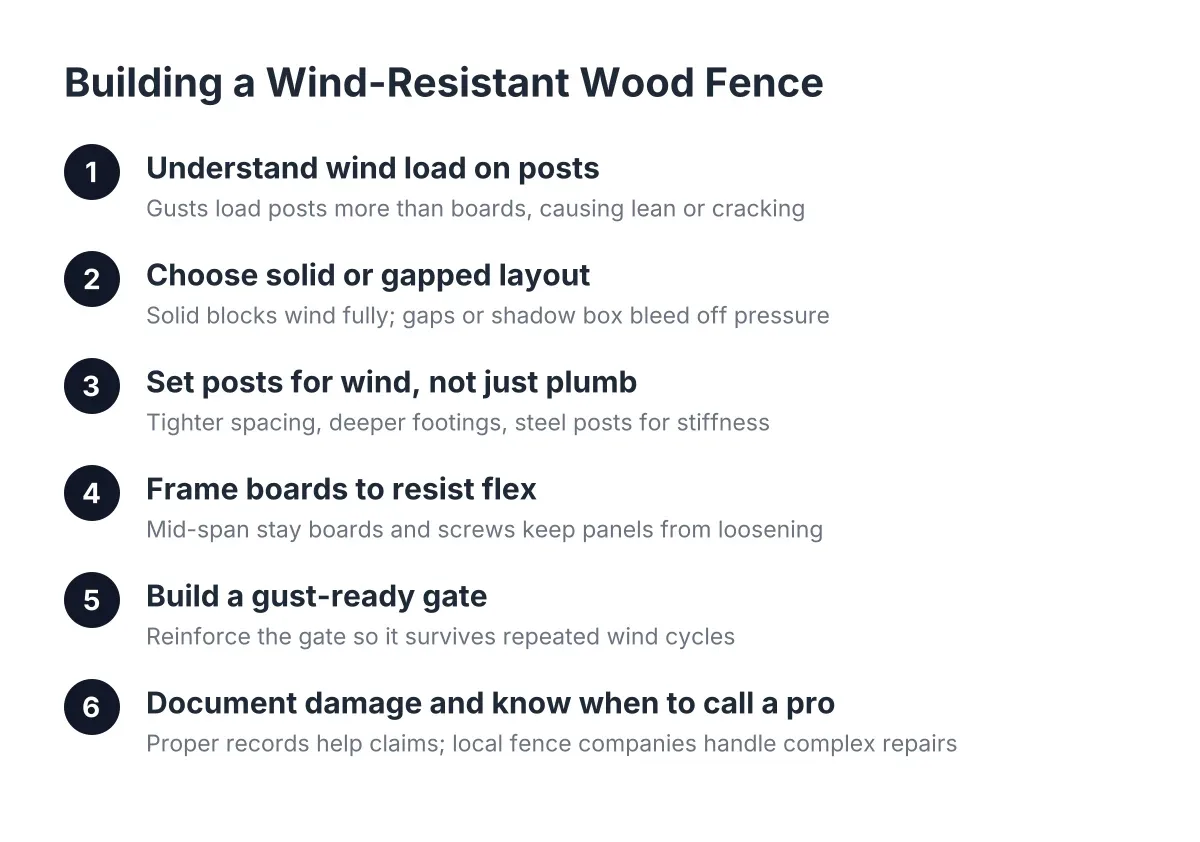
Wind affects horizontal wood fencing mainly by loading the posts, not the boards. A solid horizontal privacy fence acts like a sail. Every gust pushes the full face of the panel, and all of that force transfers to the posts and the footings. The boards themselves rarely snap in a storm; the posts lean, crack at grade, or pull loose in the hole.
Horizontal layouts add one twist. Boards run post to post, so each board spans the full gap between posts. On long spans, wind pressure flexes those boards in and out over time. That flexing loosens fasteners and opens gaps at the splice points. Vertical fences spread the same load across rails; horizontal fences put it on the boards directly.
Therefore, a horizontal fence built for Reno wind needs three things a mild-climate build can skip: tighter post spacing or mid-span support, deeper and better-compacted footings, and a board layout that either passes wind through or is framed to resist it. The rest of this guide walks through each one.
Step 2: Decide Between Solid Boards and a Gapped Layout
First, settle the biggest wind decision before you buy a single board: solid privacy or gaps. A solid fence blocks wind almost completely, which also means it catches almost all of it. A gapped horizontal layout, or a shadow box style with offset boards, lets wind pass through and sheds a large share of the load. Understanding wind resistant fence design choices helps you select the layout that fits your site's exposure.
Here is how the options compare in a high-wind yard:
- Solid horizontal privacy fence: Full privacy, maximum wind load. Needs the strongest posts and footings. Best for sheltered lots or shorter runs.
- Horizontal wood fence with gaps: Small, even gaps between boards bleed off wind pressure. You trade some privacy for a fence that takes less abuse in a gust.
- Shadow box horizontal: Boards alternate on both sides of the frame. Wind passes through the offsets while sight lines stay mostly blocked. A solid middle ground for exposed Sparks lots.
For example, a wood horizontal fence on an open lot near the edge of a newer Sparks subdivision, with nothing between it and the wind, is a strong candidate for gaps or shadow box. A fully fenced-in backyard mid-block can often carry a solid design. Match the layout to the exposure, not the photo you saved from a design site.
Step 3: Set Posts for Wind, Not Just for Plumb
Posts are where wind wins or loses. Most storm-damage fence repair calls in Washoe County trace back to a post failure: rot at the soil line, a shallow footing, or loose backfill. The panel on the ground is the symptom. The post was the cause.
Plan the post work around three points:
- Spacing. Shorter spans between posts mean less sail area per post and less board flex. On exposed runs, tightening the spacing is the single most effective wind upgrade.
- Depth and footing. High-desert soil here is alkaline and goes through hard freeze-thaw swings every winter. Footings need enough depth to get below the movement, and the concrete or backfill must be compacted thoroughly. Poor tamping is the main reason posts loosen under repeated wind and water load.
- Post material. Wood posts can warp, twist, and rot over time even when the boards above them are maintained. Steel posts wrapped or faced with wood give a horizontal fence a cleaner long-term story in wind country. If you are rebuilding after a storm and some existing steel posts survived, keeping them and adding new posts between can produce a stiffer fence than a fresh build at the same height.
In addition, think about the bottom of the fence. A pressure-treated rot board at grade keeps cedar or redwood boards from wicking moisture out of pooled snowmelt. Rot at the bottom edge weakens the whole panel long before it looks bad, and a weakened panel fails sooner in wind.
Step 4: Frame the Boards So Wind Cannot Flex Them
Next, build the panel itself to fight flex. Horizontal boards spanning post to post will bow in and out under repeated gusts unless something holds them mid-span. The fix is a vertical stay board centered between posts. It ties every horizontal board together so the panel moves as one stiff unit instead of a stack of loose planks. Proper wind resistant fence design includes mid-span bracing to prevent board flex during gust cycles.
Where board ends meet between posts, use a vertical trim strip to cover the splice. This does two jobs. It cleans up the look, which is half the reason people choose horizontal in the first place. It also caps the joint where wind-driven flex would otherwise work the board ends loose.
Fasteners matter too. Screws hold flexing boards far better than nails over years of gust cycles. Two fasteners per board at every post and stay keep boards from pivoting and opening gaps.
Step 5: Build the Gate to Survive Gusts
Gates fail first in wind. A horizontal wood fence gate is a heavy, solid rectangle hanging on two hinges, and a hard gust slamming it against the latch or the stop strains every joint. Design for that from the start.
Keep the gate as light as the design allows, consider a gapped board pattern on the gate even if the fence is solid, and use a steel gate frame under the wood facing. Diagonal bracing stops sag; a solid latch and a gate stop prevent wind from throwing the gate past its swing. A spring or closer helps on exposed entries where gates get left open.
Step 6: Document Wind Damage Correctly if You Are Filing a Claim
If wind already affected your horizontal wood fence and you are dealing with insurance, document before you touch anything. Adjusters want to see the damage as the storm left it.
- Photograph every leaning post, broken board, and failed section from several angles, including close-ups of posts at the soil line.
- Note the date of the wind event and which direction the damaged runs face.
- Get an itemized repair estimate that breaks out posts, boards, footings, gate hardware, and labor as separate lines. Adjusters process line items; a single lump-sum number invites pushback.
- Ask whether the damaged sections can be repaired to match or whether partial replacement makes more sense, and get that reasoning in writing.
As a reference point, Angi reports wood fence repair typically runs $300 to $925, with average costs around $600, though a horizontal rebuild with post replacement varies with the specifics. For context on whether repair or replacement is the right call, wood fences last about 15 years on average and up to 20 depending on wood type, climate, and pest exposure, according to Angi. A ten-year-old fence with one downed section is a repair. A fence at the end of that window may be a replacement conversation with your adjuster instead.
Suppose a homeowner in Sparks loses two sections of solid horizontal fence in a winter windstorm. In that scenario, the smart move is photos first, then a line-item estimate that separates the two broken posts from the salvageable boards, then a rebuild that adds a stay board and tighter spacing so the same gust pattern does not take the fence down again. The claim covers the damage; the design change covers the next storm.
Step 7: Know When to Call a Local Fence Company
Some of this is honest DIY territory. Swapping cracked boards, adding a stay board, or re-screwing loose panels is a weekend job for a handy homeowner. Post work is different. Digging out a failed footing, setting a new post plumb in alkaline soil, and compacting it to hold wind load is where most DIY repairs come up short, and a loose post undoes everything above it.
Call a local fence company when posts have moved, when the damage spans multiple sections, or when an insurance claim needs an itemized estimate that will hold up with an adjuster. A crew that installs horizontal fences in Reno and Sparks already builds for the wind exposure, freeze-thaw cycles, and soil conditions described above, and can tell you plainly whether your fence needs a repair or a rebuild.
One trade-off worth stating: every wind upgrade in this guide, from tighter post spacing to steel posts to a shadow box layout, adds material and labor cost. The right balance depends on your lot's exposure, your privacy needs, and how long you plan to keep the fence. A short walk of the property line with someone who builds these for Washoe County conditions settles most of those questions in one visit.
If you need horizontal wood fence installation, Reno Sparks Fence Pros can help.
Prefer to talk it through? Call (775) 369-4729 — a quick call is usually the fastest way to get a straight answer for your situation.