
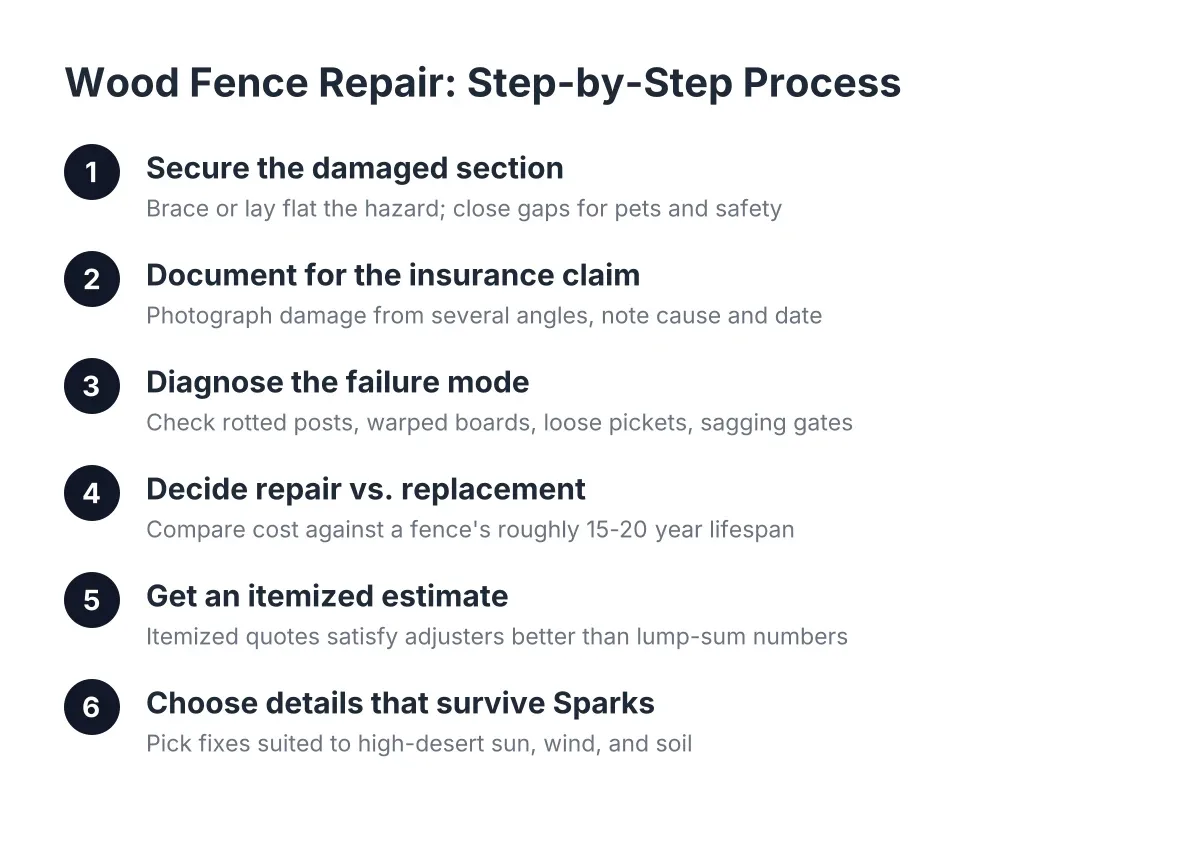
Wood Fence Repair Steps for Rot, Warping, and Loose Boards in Sparks
High-desert weather is hard on wood. Wind events knock sections flat, freeze-thaw winters crack posts at the ground line, and alkaline Washoe County soil speeds up rot where wood meets dirt. If you are standing in your yard looking at a leaning or half-down fence, this guide walks you through wood fence repair step by step: how to assess the damage, what to document for an insurance claim, and how to work with a local fence company so the fix holds up to the next storm.
This is written for the homeowner who did not plan on this. A tree limb came down, a gust took out three panels, or a slow rot problem finally tipped a section over. Here is the order of operations that gets it fixed without wasted money or a denied claim.
Step 1: Secure the Damaged Section Before Anything Else
First, deal with the immediate hazard. A leaning fence section with a concrete footing attached is heavy, and a loose panel in Sparks wind becomes a projectile. If a section is down or hanging, pull it flat on the ground or brace it upright with a 2×4 screwed into a solid post.
If the fence contains a dog or borders a sidewalk, close the gap temporarily. A sheet of plywood, a cattle panel, or even a strap of ratchet webbing between posts buys you time. This matters for liability too; a fence that falls on a neighbor's car or lets a pet out creates a second problem on top of the first.
Do not haul anything to the dump yet. If you plan to file a claim, the adjuster may want to see the damage or at least photos of it in place.
Step 2: Document Everything for the Insurance Claim
Before you move a single board, photograph the damage from several angles. Insurance adjusters work from evidence, and the homeowner who documents well gets fewer pushback questions.
Capture the following:
- Wide shots showing the full damaged run and its location on the property
- Close-ups of broken posts, snapped rails, and split pickets
- The cause if visible, such as the fallen tree limb or tire marks from a vehicle impact
- Date-stamped photos or a note of when the storm or impact happened
- A rough count of damaged sections, posts, and any gate hardware
In addition, check your policy or call your agent before assuming anything. Most homeowner policies cover fence damage from wind, falling trees, and vehicle impact under the "other structures" portion of the policy. Gradual rot and termite damage are usually excluded, since insurers treat those as maintenance. Knowing which bucket your damage falls into shapes everything that follows.
One honest caution: if the damage is clearly long-term rot rather than a sudden event, filing a claim can waste weeks and still end in a denial. Talk to your agent first.
Step 3: Diagnose the Failure Mode Before Repairing Wood Fences
Next, diagnose before you repair. Sparks-area wood fences fail in predictable ways, and the fix depends on which failure you have.
Rotted posts at the ground line
This is the most common failure in Washoe County. Freeze-thaw cycles open cracks in the post, moisture gets in, and alkaline soil conditions finish the job. A post can look fine above grade and be mush where it enters the concrete. Push on each post firmly; if it moves at the base, probe the wood at ground level with a screwdriver. Soft, spongy wood means the post is done.
Watch for knots near ground level too. A knot right where the post is most stressed is a built-in weak point, and posts often snap there in a wind event.
Warped and twisted boards
High-desert sun bakes one side of a fence while the shaded side holds moisture. Boards cup, twist, and pull their fasteners loose. A warped board can sometimes be refastened with exterior screws; a badly twisted one needs replacement.
Loose or popped pickets
Nails back out of dry wood over time. If the boards themselves are sound, this is the cheapest fix on the list: pull the nails and refasten with coated exterior screws.
Sagging gates
Gates fail first because they carry moving load. Check whether the problem is the hinge post leaning, worn hinges, or a racked gate frame. Each has a different fix, and replacing the gate when the real problem is a rotted hinge post solves nothing.
Step 4: Decide Between Repair and Replacement
A fence with localized damage is a repair job. A fence failing everywhere is a replacement job, and paying for section-by-section fixes on a fence at the end of its life throws money away. According to Angi, wood fences last about 15 years on average, up to 20 depending on wood type, climate, and pest exposure. If your fence is past that window and multiple posts are soft, get a replacement estimate alongside the repair estimate and compare.
However, there is a smart middle path worth asking about. When a post has rotted at ground level but the concrete footing is still solid, a crew can cut the post above the rot and set a steel post into the existing footing. That avoids the cost of digging out old concrete, and it leaves you with posts that will not rot again. Homeowners often assume the whole footing has to come out; it usually does not.
On cost, according to Angi, wood fence repair runs from $300 to $925 nationally, with average costs around $600. Treat that as context, not a quote. Your actual number depends on how many posts failed, whether footings can be reused, lumber type, gate work, and access to the fence line. Catching damage early keeps a repair from turning into a replacement.
Step 5: Get an Itemized Wood Fence Repair Estimate for the Insurance Adjuster
Here is the step that trips up most claim filers. Adjusters want an itemized estimate, not a single lump-sum number. When you search for wood fence repair near me and start calling, tell each local fence company up front that this is an insurance claim and you need the estimate broken out.
A claim-ready estimate should list:
- Number of posts replaced, with material and setting method
- Linear feet or number of panels of fencing rebuilt
- Rails, pickets, and hardware itemized separately
- Gate repair or replacement as its own line
- Haul-away and disposal of damaged material
- Labor shown distinctly from materials
For example, suppose a homeowner in Sparks loses four panels and two posts when a winter wind event rolls through. In that scenario, a lump-sum estimate that just says "fence repair" invites the adjuster to question the number. The same work itemized into posts, panels, rails, hardware, labor, and haul-away typically moves through review with far less friction, because the adjuster can match each line against their own pricing software.
Be clear about the process too. The homeowner files the claim and owns the relationship with the insurer; a fence company supplies the estimate, answers the adjuster's questions about scope, and does the work. Do not expect a contractor to negotiate your claim for you, and be cautious of anyone who promises to.
One more thing: do not authorize full repair work before the claim is approved unless you are prepared to pay out of pocket. Temporary securing, as in Step 1, is fine and expected. Rebuilding the whole run before the adjuster signs off can complicate the payout.
Step 6: Choose Repair Details That Survive Sparks Conditions
Finally, make the repaired section outlast the original. A rebuild done the same way the old fence was built will fail the same way. Ask your contractor about these details:
- Steel posts instead of wood where wind exposure is worst; wood posts warp, twist, and rot in ways steel does not
- Drainage around post bases, since concrete poured tight against wood can trap moisture at the ground line and speed up rot
- A pressure-treated rot board along the bottom of a cedar fence, so the pickets do not wick moisture from pooled snowmelt
- Stain on both sides of the fence, not just the street side; sealing both faces extends the life of the wood considerably
These choices add a little to the estimate but change what you are buying. A repair that reuses sound footings, upgrades the failure points, and seals the wood is a repair you make once.
When to Bring in a Pro Instead of Doing It Yourself
Swapping a few loose pickets is a Saturday job for most homeowners with a drill. Post replacement is different. Breaking out or reusing concrete footings, setting posts plumb in rocky Washoe County soil, and matching an existing fence line take tools and judgment that a weekend repair often lacks. If more than one post failed, if a gate is involved, or if an insurance adjuster needs an itemized professional estimate, hire a local crew that handles fence repair in Sparks and Reno regularly.
The fastest path from half-down fence to settled claim in 2026 is the order above: secure it, document it, diagnose it, get an itemized estimate, and rebuild the weak points stronger than they were.
If you need wood fence repair, Reno Sparks Fence Pros can help.
Prefer to talk it through? Call (775) 369-4729 — a quick call is usually the fastest way to get a straight answer for your situation.