
Horizontal Wood Fence Repair: Fixing Picket-on-Board Damage Step by Step
Horizontal wood fence repair works differently than fixing a standard vertical picket fence. The boards run sideways between posts, carry their own weight across the span, and bow or sag in ways vertical pickets never do. If your horizontal fence board repair needs attention in Sparks or Reno—whether it's a cracked board, a sagging run, or a gap your dog has already found—this guide walks through the process in order, from inspection to the final trim strip.
This matters double if the fence is doing a safety job. A horizontal design with a loose bottom board is an open invitation for a determined dog. For an HOA pool enclosure or common-area perimeter, one failed board can turn into a compliance problem before the next board meeting. The steps below apply to a single backyard run or a multi-phase community fence line.
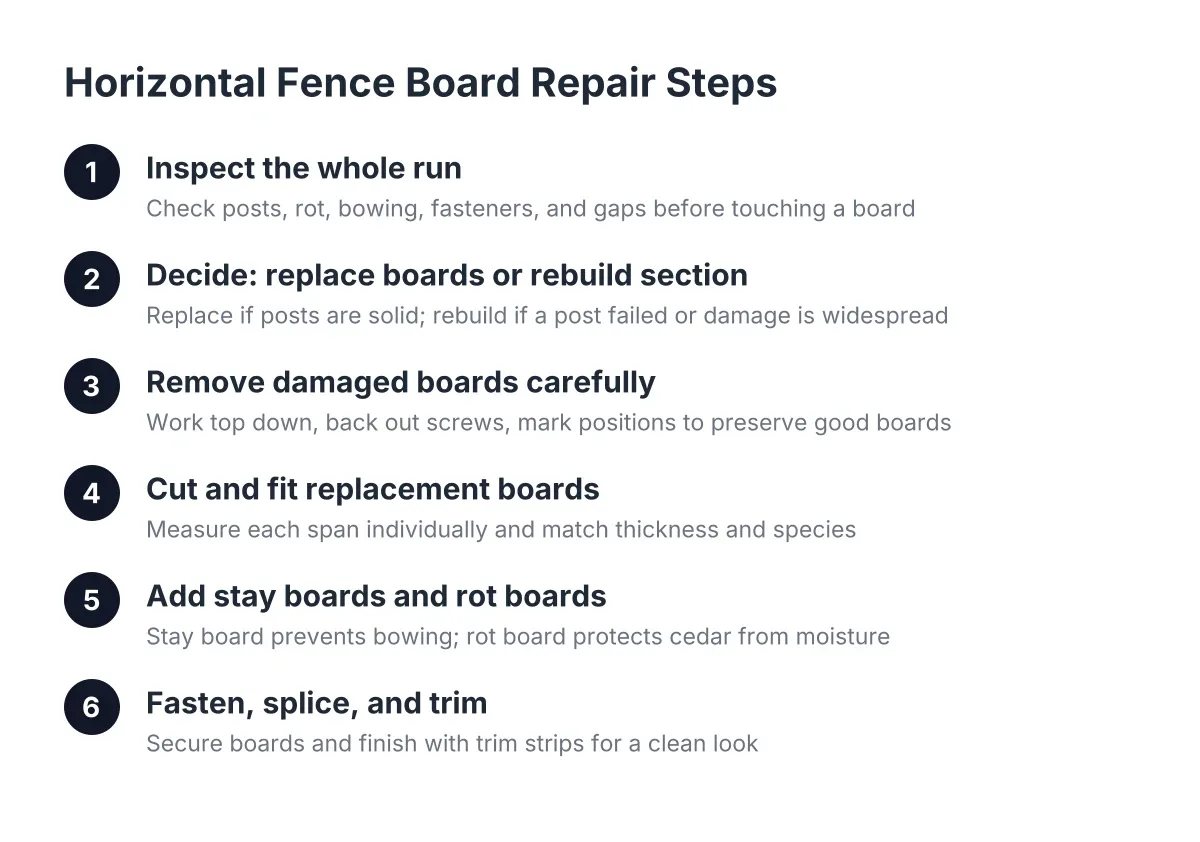
Step 1: Inspect the Whole Run Before You Touch a Board
Start at a post, not at the damaged board. Horizontal fences transfer load differently than vertical ones; a board that looks broken in the middle of a span often failed because a post shifted or a fastener pulled out at the end. Walk the full run and push on each post. Any post that moves more than a slight flex at the top needs attention first.
Check these points on every section:
- Post movement at ground level, where freeze-thaw cycles in Washoe County loosen footings
- Rot at the bottom board, which sits closest to pooled water and sprinkler spray
- Bowing in the middle of long spans, where horizontal boards flex in and out
- Pulled or rusted fasteners at the splice points where boards meet on a post
- Gaps between boards wide enough for a small dog or a child's foot
Posts fail from rot even when the boards above them have been stained and maintained for years. If a post is the real problem, replacing boards first wastes money. Fix the structure, then the face.
Step 2: Decide Between Board Replacement and Section Rebuild
Replace individual boards when the posts are solid and the damage is limited to a few cracked, warped, or rotted boards. Rebuild the section when a post has failed, when more than a third of the boards in one span are damaged, or when the span has bowed so far that straight boards will not sit flush.
There is a middle path worth knowing. If a wood post has rotted at the base but the concrete footing is sound, an interim post repair that preserves the footing can hold the fence straight for now. That keeps the fence from sagging or falling while letting you plan a full replacement later, possibly with steel posts, without paying for footing demolition twice. For an HOA working through a reserve-fund cycle, this interim approach can bridge a run to the next budget year.
According to Angi, wood fences last about 15 years on average and up to 20 depending on wood type, climate, and pest exposure. High-desert sun and wind in Sparks push fences toward the shorter end of that range. If your horizontal fence is past year twelve and showing damage in several spans, price the rebuild before committing to piecemeal board swaps.
Step 3: Remove Damaged Boards Without Wrecking the Good Ones
Work from the top down. Horizontal boards often share fasteners at splice points, and a vertical trim strip may cover the board ends where they meet on a post. Pry the trim strip off first, carefully, because you will reuse it or match it.
Back out screws rather than prying nailed boards where you can. Prying against a good board above or below the damaged one dents cedar fast. If the fence was nailed, use a flat bar with a scrap block behind it to spread the pressure. Mark each removed board's position with chalk on the post so replacements go back in the same order, especially on fences with mixed board widths.
For example, suppose a homeowner in a newer Sparks subdivision has a horizontal cedar fence where the bottom two boards rotted along a stretch near the sprinkler line. The posts are fine. That job is a board swap: remove the trim strip, back out the fasteners on two boards per span, and keep everything above untouched.
Step 4: Cut and Fit Replacement Boards to Each Span
Measure each span individually. Posts shift slightly over the years, so a board cut for one span may not fit the next. Cut boards so the ends land on the center of the post face, leaving room for the neighboring span's board to share the same post.
At corners and run ends where a full-length board will not fit, measure the remaining gap and cut a section to size. Add a vertical picket at the corner to hide the cut edge; raw end grain at a corner weathers fast and looks unfinished. On jobs that mix full and cut sections, put the cut sections in the least visible part of the yard and save full boards for the stretch you see from the patio or the pool deck.
Match the board thickness and species. A thicker replacement board in the middle of a flat horizontal face stands out immediately, and horizontal designs show that kind of mismatch more than vertical pickets do.
Step 5: Understanding Stay Boards and Rot Boards in Horizontal Fence Repairs
A horizontal cedar fence needs a vertical stay board in the middle of each span between posts. Without it, the horizontal boards bow in and out over time as they absorb and release moisture. If your fence is bowing and never had a stay board, this repair is the time to add one. Fasten it to every board in the span so the boards move together instead of individually.
At the bottom, install a pressure-treated pine rot board under the lowest cedar board. Cedar wicks moisture from pooled water and wet soil; a treated rot board takes that abuse instead and protects the boards above it. In Washoe County's alkaline soil, keeping cedar off the ground extends the life of the whole fence. For pet owners, the rot board has a second benefit: it closes the ground-level gap that diggers and small dogs exploit first.
Step 6: Fasten, Splice, and Trim for a Clean Finish
Fasten each board with two exterior-grade screws at every post and at the stay board. Screws hold better than nails in the wind loads common across Reno and Sparks, and they let the next repair come apart cleanly.
Where board ends meet on a post face, install a vertical trim strip over the splice line. The trim strip covers the joint, hides minor cut variations, and gives the horizontal fence its finished look. Reinstall the original strip if it survived removal, or cut a new one from matching stock.
Finally, check every gap with the same eye an inspector would use. For a fence around a pool area, gates need working self-closing hinges and a self-latching mechanism mounted at the required height, and the repaired section cannot introduce a climbable foothold. Pool barrier requirements are specific, and as of 2026 they vary by jurisdiction; if the repaired fence serves as a pool barrier, have the finished work checked against your local code rather than assuming board spacing alone covers it.
What Horizontal Wood Fence Board Repair Costs Depend On
The cost of horizontal wood fence repair comes down to scope, materials, and access, not a flat per-board rate. According to Angi, wood fence repair costs range from $300 to $925, with average costs around $600, and catching damage early keeps you on the low end of that range instead of sliding into replacement territory.
Several factors push a horizontal repair above a comparable vertical fence fix:
- Board-on-board and custom horizontal styles use more material per foot than a flat-face privacy fence, which raises both material and labor
- Longer boards cost more per piece and are harder to transport and handle
- Splice points, trim strips, and stay boards add fastening and finish work that vertical pickets skip
- Post or footing problems turn a board swap into a structural repair
Whether you handle the boards yourself or bring in a local fence company, get the scope defined before anyone quotes a number. For an HOA or property manager, that means a walk-through of the full fence line, a count of spans needing board work versus structural work, and a phased plan if the damage spreads across multiple areas. A clear scope keeps a repair bid comparable across vendors and keeps the reserve fund honest.
When to Call a Pro Instead of Patching
Call a professional when posts have failed, when the fence serves as a pool barrier, or when the run sits on a slope or property line you are unsure about. Structural post work involves footing decisions that affect the whole fence line, and pool barrier compliance carries real safety stakes that a weekend repair should not gamble on.
Board swaps, trim strips, and rot boards sit within reach of a capable homeowner with a saw and a drill. Everything below grade, and everything that keeps a toddler out of the pool or a dog in the yard, deserves a second set of trained eyes.
If you need wood fence repair, Reno Sparks Fence Pros can help.
Prefer to talk it through? Call (775) 369-4729 — a quick call is usually the fastest way to get a straight answer for your situation.