
DIY Wood Fence Repair: Tools, Skill Level, and Mistakes to Avoid
Thinking about DIY wood fence repair after a windstorm knocked down a section, or a tree took out part of your fence line? Plenty of homeowners in Sparks and Reno fix a loose board or a sagging gate themselves. Some repairs are honest weekend work. Others, like a rotted post set in concrete, turn into a two-day fight with a hole in the ground. This guide walks through the repair step by step, flags the mistakes that cost people the most, and shows you where the line sits between a DIY fix and a call to a local fence company. Understanding common DIY fence repair mistakes is the first step toward a successful project.
One note before you grab tools. If your fence came down in a storm and you plan to file an insurance claim, photograph everything first. Take wide shots of the whole fence line and close-ups of each broken post, panel, and rail before you move a single board. Adjusters want to see the damage as it happened. Repairing first and documenting later is the fastest way to complicate a fence damage claim.
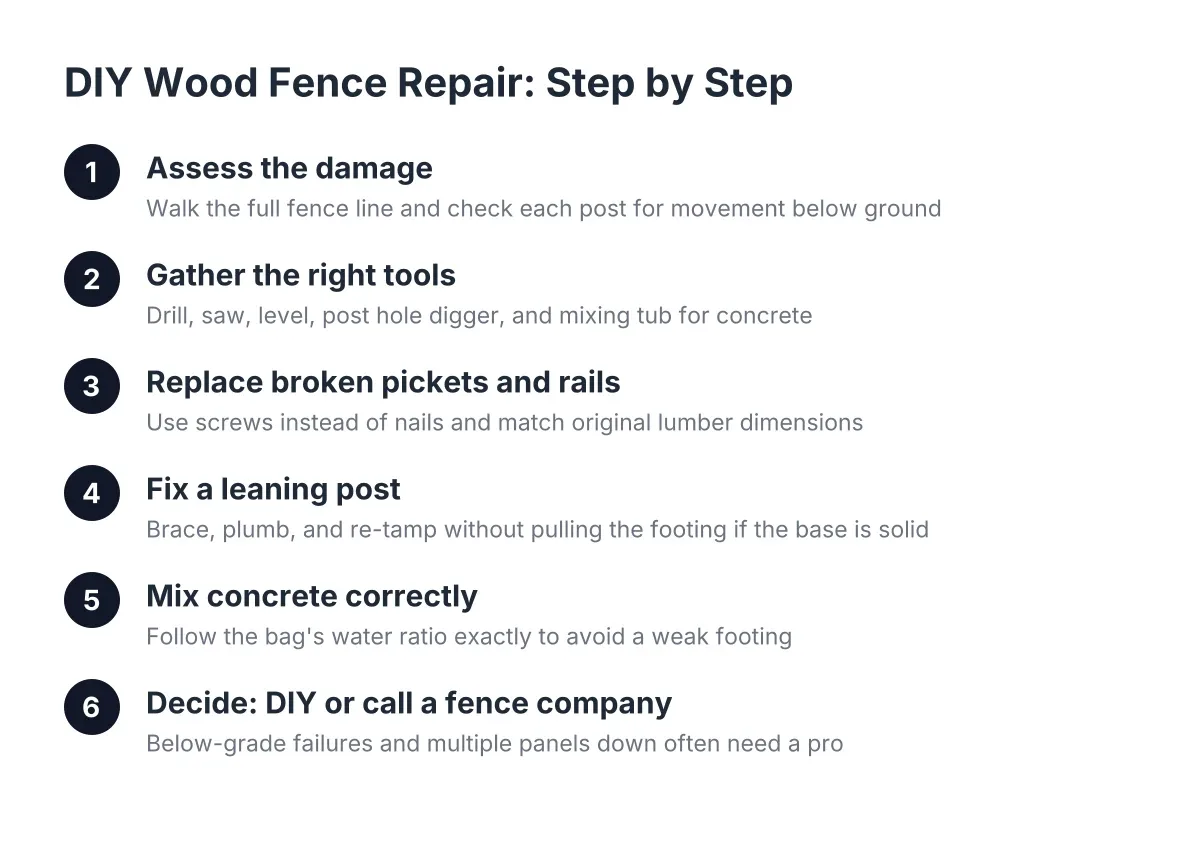
Step 1: Assess the Damage Before You Touch Anything
Walk the full fence line, not just the section that fell. Wind damage in Washoe County rarely stops at one panel. Push on each post. A post that moves more than an inch at the top has a problem below ground, even if it looks fine above the dirt.
Sort what you find into three buckets:
- Cosmetic: loose pickets, popped nails, a warped board or two. Clear DIY territory.
- Structural but accessible: a cracked rail, a leaning post that is still solid at the base, a gate that dropped out of square. DIY is possible with the right tools and a helper.
- Below-grade failure: posts rotted at ground level, posts snapped inside their concrete footings, or multiple panels down. This is where DIY projects stall, and where a wood fence repair company near me search usually starts.
Wood fences last about 15 years on average, up to 20 years depending on wood type, climate, and pest exposure, according to Angi. If your fence is near that age and several posts are soft, repairing one section buys time but does not change the math. Budget your effort accordingly.
Avoiding Common DIY Fence Repair Mistakes in Storm Claims
Suppose a homeowner in Sparks loses three panels when a gust snaps two posts at ground level. In that scenario, the adjuster will want an itemized estimate: posts, rails, pickets, concrete, hardware, and labor, each listed as a line. A DIY receipt pile from the hardware store rarely satisfies that format. If a claim is involved, get a written itemized estimate from a fence company before deciding to do the work yourself, even if you end up doing it anyway. The estimate documents fair repair value, which protects you with the insurer.
Step 2: Gather the Right Tools for DIY Wood Fence Repair
Most fence repairs need less than you think, until you hit a post. Here is the realistic kit:
- Cordless drill or impact driver with exterior-rated screws
- Hammer and pry bar for pulling old pickets
- Circular saw or reciprocating saw for cutting rails and posts
- Level, string line, and tape measure
- Post hole digger and digging bar if a post must come out
- Wheelbarrow or mixing tub for concrete
- Clamps and a scrap 2×4 for bracing while you work
Skill level check: replacing pickets and rails is beginner work. Resetting or replacing a post is intermediate. It involves digging in compacted high-desert soil, handling concrete, and holding plumb while it sets. If you have never mixed concrete or your soil fights the shovel, double your time estimate.
Step 3: Replace Broken Pickets and Rails First
Start with the easy wins. Pry off broken pickets, pull or cut old nails flush, and screw new boards to the rails. Use screws, not nails, on repairs. Screws grip better in older rails and let you adjust a board that sits proud of its neighbors.
For a cracked rail, cut out the damaged length and sister a new rail beside it, or replace the full run between posts. Match the lumber dimensions of the original. A thinner rail flexes in wind, and Sparks wind finds every weak rail eventually.
For example, if replacement pickets are a different height than the originals, put the cut or shortened boards in the least visible stretch of the yard and run full boards along the street side or patio view. Installers do this on every mixed repair, and it makes the patch nearly disappear.
Step 4: Fix a Leaning Post Without Pulling the Footing
A leaning post with a solid base often just needs bracing and re-tamping. Push the post plumb, brace it with 2x4s staked to the ground, then pack soil or add concrete around the base. Check plumb on two faces, not one, before the concrete sets.
However, if the post is rotted at ground level, the lean will come back. Rot at the soil line is the most common wood fence failure, and it happens even on fences that have been repainted for years. Paint protects the boards; it does nothing for the buried section of the post.
Here is a decision that trips up a lot of DIYers. The first instinct is to rip out the whole post and its concrete footing. That footing can weigh a lot, and breaking it out of alkaline, compacted Washoe County soil is brutal work. Often the smarter move is to cut the rotted post off above the bad section and set a new steel post into the original concrete footing. It preserves the footing, costs less effort, and that repair effectively carries forward if you later rebuild the fence on steel posts. Not every footing allows this, so assess before committing.
Step 5: Mix Concrete Correctly When Setting a New Post
If you do set a new post, the concrete mix is where beginners fail most. The classic mistake is adding too much water because nobody measures it. Soupy concrete is weak concrete, and a weak footing means the post leans again by next winter's freeze-thaw cycles.
Follow the bag's water ratio exactly. The mix should hold its shape like thick oatmeal, not pour like a milkshake. Set the post, check plumb on two faces, brace it, and leave it braced for the full cure time before hanging rails. Rushing this step undoes the whole repair.
Step 6: Common Mistakes in DIY Fence Repair Projects
Beyond wet concrete, these are the errors that turn a weekend project into a callback to yourself:
- Repairing panels on a failing post. New pickets on a rotted post is money nailed to a falling structure. Check the post first, always.
- Skipping the string line. Eyeballing picket height leaves a wavy top line you will see from the kitchen window forever.
- Mismatched fasteners. Interior screws rust and streak the wood within a season. Use exterior-rated or coated fasteners only.
- Ignoring the rest of the line. Fix one section while three neighboring posts are soft, and the next windstorm moves your repair ten feet down the fence.
- Starting insurance-claim work before the estimate. If a claim is open, doing the wood fence repair yourself before the adjuster reviews a documented estimate can reduce what the insurer pays. Get the paperwork lined up first.
Step 7: Decide When to Call a Local Fence Company Instead
Be honest about the scope. One picket, one rail, even one accessible post: DIY makes sense. Angi reports wood fence repair costs range from $300 to $925, with average costs around $600, so for small jobs the savings from doing it yourself are real but limited. Multiple posts down, a fence at the end of its life, or an HOA or insurance claim in the mix changes the picture.
Call a professional when:
- Two or more posts have failed below grade
- The fence borders a sidewalk, pool area, or neighbor's property where a half-down fence creates liability
- An HOA or property manager requires the repair to match community fencing specs
- An insurance adjuster needs an itemized, line-item estimate to process the claim
- The damage sat for weeks and another storm season is coming
Property managers and HOA boards face a version of the same decision at scale. Say an association in Reno has a common-area perimeter fence with a dozen soft posts across two phases. In that scenario, patching sections one by one through maintenance staff costs more over the life of the fence than a planned, phased repair by a crew that can invoice the association and schedule around the reserve-fund cycle.
One more trade-off worth naming. The cheapest bid is rarely the cheapest fence. Pricing differences between contractors reflect construction practices, materials, and expected longevity, not just markup. A fence rebuilt in five years costs more than paying for solid work once.
The Bottom Line on Repairing Your Own Wood Fence
DIY wood fence repair works well for pickets, rails, and the occasional straightforward post. It falls apart at below-grade rot, multi-post failures, and anything involving an insurance claim or HOA approval, where documentation and matching specs matter as much as the carpentry. Assess first, photograph everything if a claim is possible, respect the concrete, and know that cutting a rotted post and setting steel in the old footing often beats digging the footing out. When the job crosses from repair into partial rebuild, a local fence company that knows Sparks and Reno wind, soil, and winters will get it standing straight the first time.
Prefer to talk it through? Call (775) 369-4729 — a quick call is usually the fastest way to get a straight answer for your situation.