
Wood Fence Rot Causes in Reno: How Freeze-Thaw Winters Destroy Posts
If a wood fence in Sparks or Reno fails, the post at ground level is usually where it starts. Understanding wood fence rot causes matters here more than in most places, because Washoe County winters put fences through dozens of freeze-thaw cycles, and our alkaline high-desert soil changes how posts hold up in the ground. Freeze-thaw fence post rot is a particular concern in this climate, where the freeze-thaw cycling repeats through every winter. This guide walks through the rot problem step by step: what causes it, how winter makes it worse, how to check your own fence, and how to decide between repair and replacement. If you are also dealing with storm damage and an insurance claim, there is a step for that too.
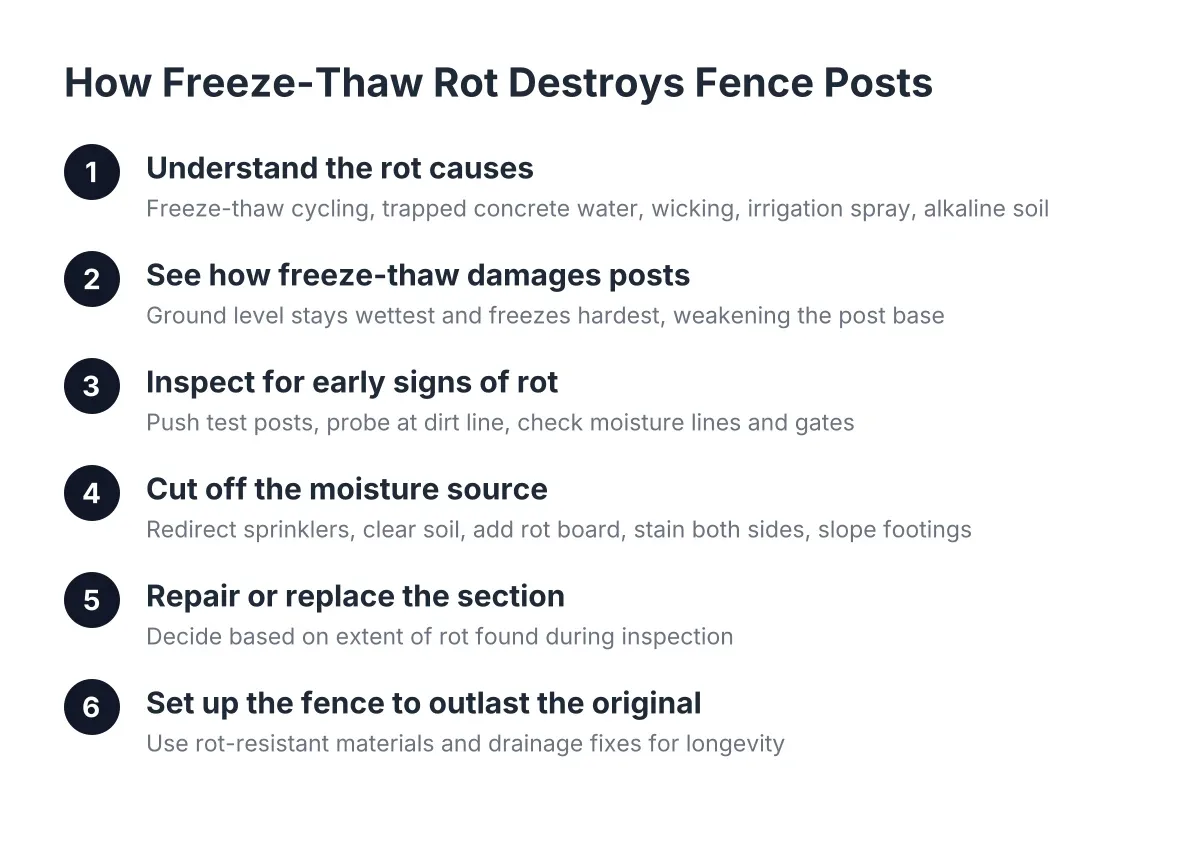
Step 1: Understanding Freeze, Thaw, and Fence Post Rot Causes in the Reno Area
Rot needs three things: wood, moisture, and the fungi that feed on wet wood. Take away the moisture and rot stops. That is the whole game.
In the Reno and Sparks area, the moisture problem looks different than it does in a humid climate. We do not have constant rain soaking pickets year round. Instead, we have snowmelt and irrigation water pooling at the base of posts, then freezing, then thawing, over and over through the winter.
Here are the main wood fence rot causes we see locally:
- Freeze-thaw cycling. Water soaks into the post at ground level, freezes, and expands. The ice opens tiny cracks in the wood grain. When it thaws, more water gets in deeper. Repeat that through a Washoe County winter and the post develops a soft, punky zone right where it meets the soil.
- Concrete that traps water. Many homeowners assume concrete around a post protects it. However, if the concrete cups water against the wood instead of shedding it, the post sits in a wet collar. Rot speeds up instead of slowing down.
- Ground contact and wicking. Wood pulls water up like a straw. Pickets that touch soil, or a cedar fence with no rot board at the bottom, wick moisture up from pooled sprinkler runoff and snowmelt.
- Irrigation spray. Sprinklers that hit the fence twice a day in summer keep the bottom foot of the fence wet. Fungi do not care whether the water came from a storm or a sprinkler head.
- Alkaline soil conditions. Our soil chemistry affects how post-setting materials and treatments perform over time, which is one reason post failures here do not always match what a generic national guide predicts.
Notice what is not on that list: old pickets. Panels often outlast posts. A fence can look fine from the sidewalk while every post is rotting at the dirt line.
Step 2: How Freeze-Thaw Cycles Damage Fence Posts at Ground Level
Why do fence posts rot at ground level instead of higher up? Posts rot at ground level because that zone stays wet the longest and freezes hardest. Above ground, wind and sun dry the wood. Below the frost line, the soil temperature is more stable. The few inches at the soil surface get the worst of both: constant moisture and repeated freezing.
That is why a post can be solid at eye level and crumble when you kick it at the base. The freeze-thaw cycles through a Reno winter act like a slow wedge, splitting the grain open a little more each season.
Wind finishes the job. Sparks and Reno get strong high-desert gusts, and a fence is a sail. A post that has lost half its cross-section at ground level will snap in the first serious windstorm. That is the classic storm-damage call: three sections flat on the lawn, posts snapped clean at the dirt line, and the broken ends dark and soft inside.
Step 3: Inspect Your Fence for the Early Signs of Rot
Do this check every spring, after the last hard freezes. It takes fifteen minutes for a typical perimeter fence.
- Push test every post. Grab each post at shoulder height and push firmly. Solid posts barely move. A post that rocks in the ground has lost its footing or its base.
- Probe at the dirt line. Press a screwdriver into the post where it meets the soil. Sound wood resists. If the tip sinks in a quarter inch or more with light pressure, rot has started.
- Look for the moisture line. A dark, discolored band at the bottom of pickets means they are wicking water. Check whether sprinklers hit that zone.
- Check gates first. Gate posts carry the most load and fail earliest. A sagging gate that drags on the ground often means a rotting hinge post, not a bad hinge.
- Walk the fence after wind. New leaning after a storm usually means a post base gave way, even if nothing fell.
For a new-build homeowner in Spanish Springs with a fence installed in the last few years, this inspection is cheap insurance. According to Angi, wood fences last about 15 years on average, up to 20 years, depending on wood type, climate, and pest exposure. Catching rot in year five instead of year ten is the difference between a stain job and a rebuild.
Step 4: Cut Off the Moisture That Feeds the Rot
Prevention is mostly drainage and separation. Work through this list:
- Redirect sprinklers so spray does not hit the fence. This is the single easiest fix and the most skipped.
- Clear soil and mulch away from post bases and the bottom rail. Wood should not touch dirt.
- Add a rot board. A pressure-treated board run along the bottom of a cedar fence takes the ground contact so the cedar pickets do not wick moisture from pooled water. When the rot board eventually fails, you replace one board instead of a fence line of pickets.
- Stain both sides of the fence. Sealing only the street side leaves the yard side open to moisture. Staining both faces meaningfully extends the fence's life, not just its looks.
- Slope concrete footings so water sheds away from the post instead of pooling against it.
Material choice matters too. Redwood resists rot naturally and holds its color, though it costs more than common pine or fir. Vinyl fence panels do not rot at all, which is why some homeowners switch materials when a wood fence reaches end of life. The trade-off is that vinyl is still PVC and offers no advantage in a wildfire scenario, and many HOA-governed subdivisions in the area specify what you can install.
Step 5: Decide Between Repairing the Post and Replacing the Section
When a post has rotted, the instinct is to rip out the post and its concrete footing and start over. That is not always the practical move. Breaking out a concrete footing is slow, heavy work, and it drives up the bill fast. Addressing freeze-thaw fence post rot at the foundation level can involve cutting the post off above the rotted section and setting a new steel post into the existing concrete footing.
An alternative worth asking any local fence company about: cut the post off above the rotted section and set a new steel post into the existing concrete footing. This preserves the footing, stops the sag, and can cost less than full removal. It also works as an interim fix; you keep the fence standing now and apply that spend toward an eventual full rebuild with steel posts, which do not warp, twist, or rot the way wood posts do.
As a rough guide for budgeting, according to Angi, wood fence repair costs range from $300 to $925, with an average around $600, and addressing damage early helps homeowners avoid higher replacement expenses. Your actual wood fence repair cost depends on how many posts failed, whether footings can be reused, access to the fence line, and material choice. If more than a third of the posts fail the push test, get a quote for replacement alongside the repair quote and compare per-year cost, not just today's number.
One honest limitation: if the fence sits on a property line, leans toward a neighbor's yard, or the damage involves a retaining condition or a structure, have a professional assess it before you attempt a DIY post fix. Those situations carry liability that a weekend repair does not solve.
Step 6: Document Everything if Insurance Is Involved
Suppose a windstorm drops three sections of your fence onto the side yard and a tree limb takes out the gate. Before anyone touches the debris, photograph it. Adjusters want to see the damage as it happened, not after cleanup.
For a fence damage claim, build this file:
- Photos of every damaged section, post, and the cause (the limb, the snapped posts) from several angles
- The date of the storm or incident
- Any photos you have of the fence before the damage, even in the background of other pictures
- An itemized estimate from a fence repair contractor that breaks out posts, rails, pickets, gates, concrete work, haul-away, and labor as separate lines
That itemized estimate is what adjusters compare against their own pricing. A lump-sum number invites pushback; a line-item estimate gives them something to approve. Ask the contractor to note in writing whether the posts show pre-existing rot, because rot and wind damage get handled differently on a claim. A post that snapped because it was already rotted may be treated as wear, while a sound fence flattened by a falling tree reads as a covered event. Knowing the wood fence rot causes behind your failure helps you have that conversation honestly.
Searching for residential fence repair near me will turn up plenty of options; what matters for a claim is finding a crew willing to write the estimate the way the adjuster needs it. Most homeowners also wait for claim approval before authorizing work, and that is reasonable, with one exception: if the downed fence creates a hazard, such as an open pool area or a dog containment problem, document the hazard and ask about a temporary fix so you are not carrying that risk for weeks.
Step 7: Set Up the Repaired Fence to Outlast the Original
After the repair, change the conditions that caused the failure. In 2026, the standard upgrades worth discussing on any Reno or Sparks wood fence repair are steel posts in place of wood, a pressure-treated rot board along the bottom, and a two-sided stain within the first season. None of these are exotic; they are the difference between a fence that rots again in the same spot and one that does not.
Then put the spring inspection from Step 3 on the calendar. The wood fence rot causes covered here—freeze-thaw cycling, trapped moisture at the footing, ground contact, and sprinkler spray—are all visible early if you look. In this climate, the fence that lasts is the one that stays dry at the dirt line.
If you need wood fence repair, Reno Sparks Fence Pros can help.
Prefer to talk it through? Call (775) 369-4729 — a quick call is usually the fastest way to get a straight answer for your situation.